Small Living Room Ideas That Make Your Space Feel Twice as Big

Living in a small space doesn't mean living with bad design. Most small living rooms feel cramped because of furniture scale and layout mistakes, not because the room is actually too small. Here's how to fix that without knocking down any walls.
Layout Rules for Small Living Rooms
The single biggest mistake people make in small living rooms is pushing every piece of furniture against the wall. It feels logical — get it out of the way — but it actually makes the room feel smaller. Floating your sofa even 3 to 4 inches away from the wall creates an illusion of airflow and makes the whole room breathe.
Keep walkways at least 18 inches wide so the room feels navigable, not like an obstacle course. Anchor the whole space with one properly-sized sofa rather than trying to squeeze in multiple small pieces — fewer, better pieces always look more intentional. If you love the idea of a sectional, an L-shape that hugs a corner can work well in a smaller room without dominating it.
Skip the traditional coffee table if floor space is tight. A set of nesting tables you can pull out when needed, or a large upholstered ottoman, gives you surface space without blocking the room. And if you're using a rug — which you should — go with at least an 8x10. A rug that's too small is one of the most common ways people accidentally shrink a room visually.
Before you rearrange your furniture or buy anything new, upload a photo of your living room to StableRender and test different layouts instantly. You'll see exactly how the space will look before moving a single piece.

Furniture That Actually Fits
Standard sofas run 84 to 96 inches wide. Apartment-size sofas run 72 to 80 inches. That 12-inch difference sounds small, but in a compact living room it's the difference between a space that works and one that doesn't. Most furniture stores carry apartment-size sofas in the $800 to $2,500 range — they're not a budget compromise, they're a smarter choice.
Armless accent chairs save another 6 to 8 inches compared to chairs with arms, and they tuck in tighter when not in use. Round coffee tables ease traffic flow better than rectangular ones — no sharp corners to navigate around. If you need a coffee table at all, consider a transparent acrylic or glass one: it takes up zero visual space while still functioning as a surface.
Replace floor-standing bookcases with wall-mounted shelving. A good floating shelf unit runs $50 to $200 per unit and keeps your floor space completely open. A console table positioned directly behind your sofa can sub in for end tables on both sides — one piece doing the work of two. And a storage ottoman ($150 to $400) is genuinely dual-purpose: seating, surface, and hidden storage in one.
Color Tricks That Expand the Room
Light walls paired with a light floor creates the maximum sense of visual space — the boundaries of the room recede rather than close in on you. A single bold accent wall on the far end of the room can actually make the room feel deeper, which is the opposite of what most people expect. Try it before you dismiss it.
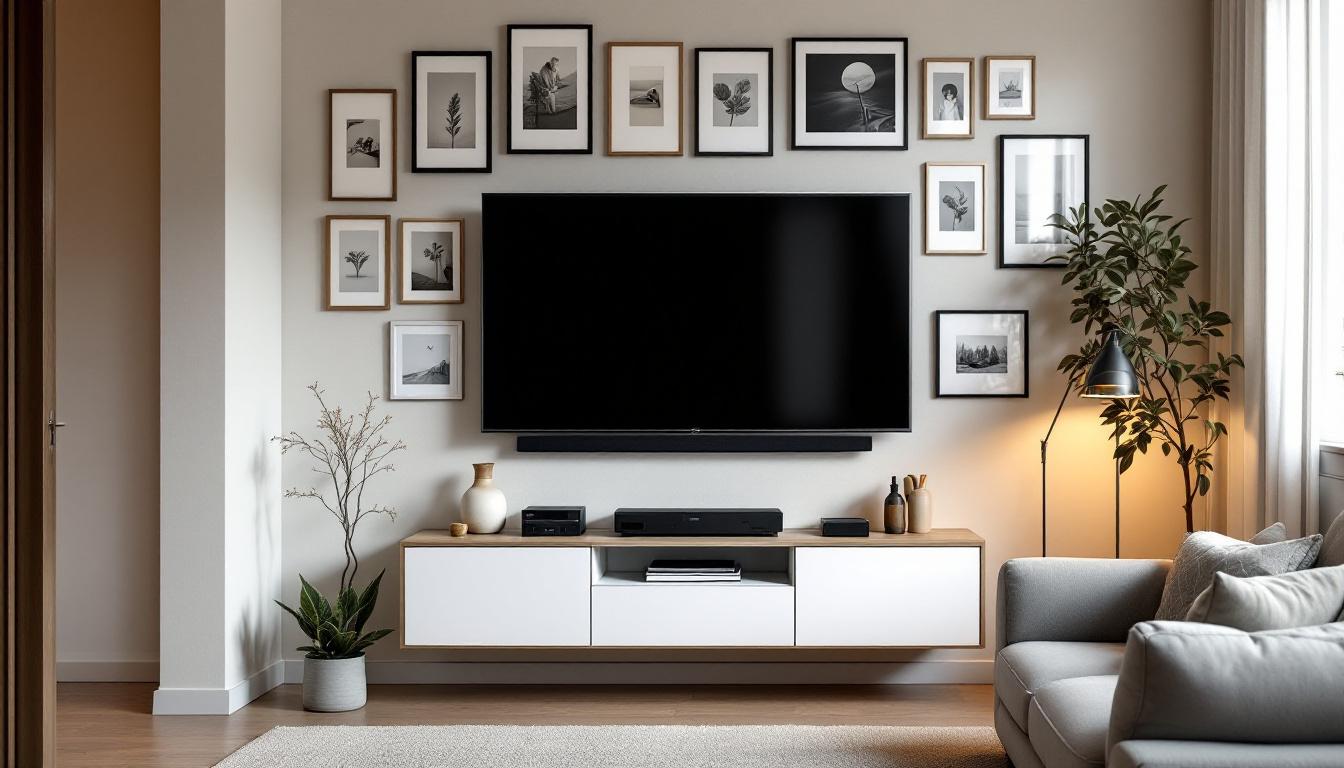
A monochromatic color scheme — using varying shades of the same color throughout — makes a room feel cohesive and larger than it is. Pair that with a large mirror placed opposite your main window and you've effectively doubled your natural light. Position a mirror on the wall that faces your window, not next to it, for the full effect.
One underrated trick: paint your ceiling the same color as your walls. It removes the visual boundary between wall and ceiling, making the room feel taller and more continuous. Vertical stripes on one wall add height without actually changing anything structural. In 2026, warm whites and soft greens are replacing the cool grays of the last decade — they're warmer and easier to live with.
You can test paint colors on your actual walls before buying a single sample pot. Upload your living room photo to StableRender and see how warm white versus soft green looks in your specific lighting and with your existing furniture.
Small Living Room Ideas With TV
Wall-mount your TV. It's the single easiest way to recover floor space and surface space in a small living room. A good mount runs $100 to $200 and takes a Saturday afternoon to install. The TV should sit with its center at roughly eye level from your seated position — that's typically 42 inches from the floor to the center of the screen.
For optimal viewing distance, use this rule: 1.5 times the diagonal screen size. So a 65-inch TV works best at about 97 inches, or just over 8 feet. If that's your whole room, consider going down to a 55-inch screen — the picture quality per dollar is better at smaller sizes anyway.
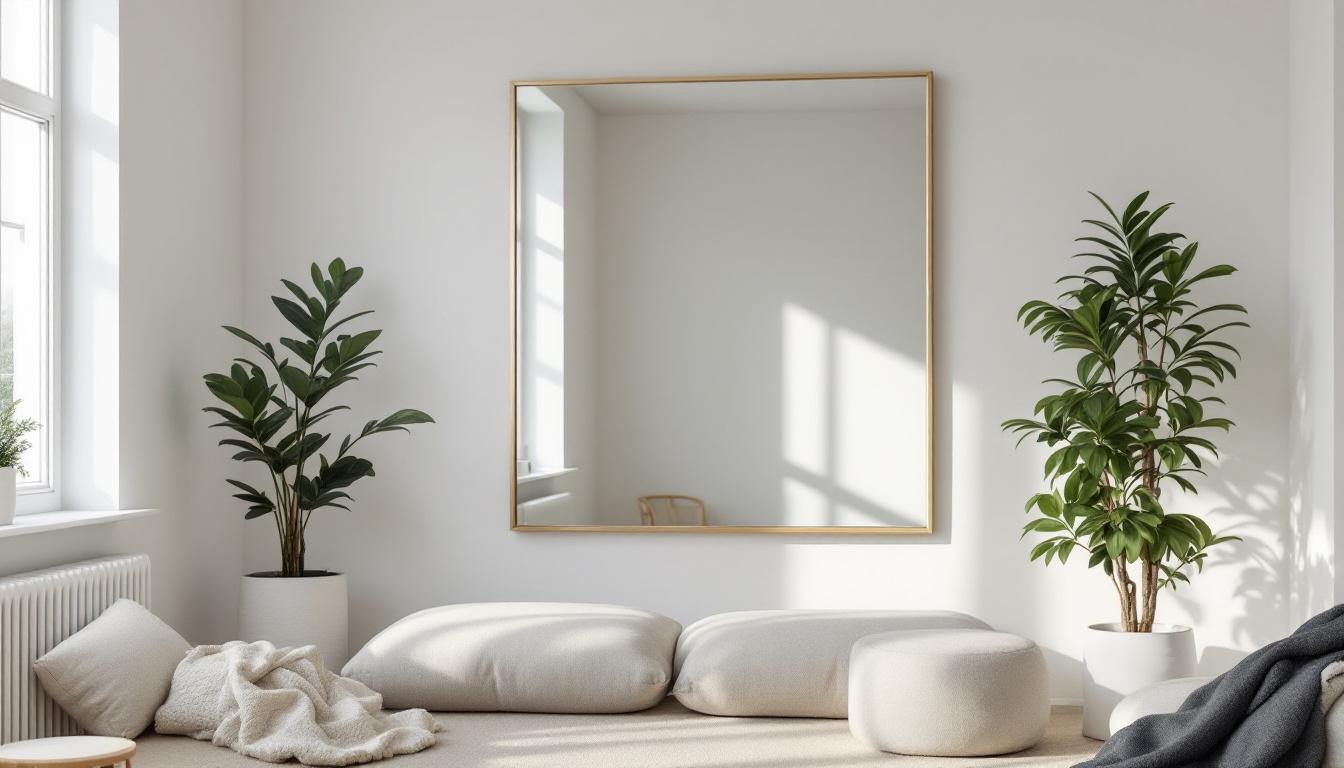
Swap a bulky entertainment center for a floating media console ($200 to $800) — it keeps cords contained while leaving the floor underneath completely open, which makes the room feel larger. For cord management on wall-mounted TVs, a simple in-wall cord channel covers everything for $10 to $30. A gallery wall built around the TV integrates it into the room so it doesn't dominate the space when you're not watching.

Storage Solutions That Don't Look Like Storage
The dead space above your doorways is prime real estate. Floating shelves installed above doors use space that otherwise does nothing. A behind-sofa console table with baskets tucked underneath gives you accessible storage without using any additional floor space. A storage ottoman as your coffee table is another one — it holds blankets, remotes, books, and still functions as a surface and extra seating when you have guests.
A vertical ladder bookshelf ($40 to $150) takes up almost no floor footprint while holding a surprising amount. If your living room has a window with any depth to it, a built-in window seat with storage underneath is one of the best investments you can make — it adds seating, storage, and a cozy focal point all in one. For a flexible, low-cost option, a pegboard wall ($30 to $60 for materials) lets you rearrange storage hooks and shelves whenever your needs change.

Lighting a Small Living Room
A single overhead light flattens a room. It creates no depth, no warmth, no sense of dimension. The fix is layering three types: ambient (general overhead or recessed), task (reading lamp, desk light), and accent (LED strips, picture lights). Together they create a room that feels alive rather than lit up.
Choose floor lamps with slim profiles rather than wide-based torchieres — they take up less floor real estate and visually read as taller and lighter. Wall sconces instead of table lamps on end tables save your surface space entirely. Recessed lighting costs $100 to $200 per fixture installed and is worth it if you're doing any ceiling work anyway.
LED strip lights installed under floating shelves ($20 to $40 for a full kit) add visual depth to the room — the light source disappears and all you see is the glow. It makes the shelves look like they're floating even more than they already do, and it adds a warmth that makes the whole room feel more considered.
Frequently Asked Questions
How do I make my small living room look bigger?
Use light colors on walls and floors, choose furniture that's properly scaled for the room (apartment-size sofas at 72-80 inches), float furniture 3-4 inches from walls instead of pushing everything against them, and place a large mirror opposite your main window. These four changes have the biggest visual impact and cost almost nothing to test.
What size sofa fits a small living room?
Look for apartment-size sofas in the 72 to 80 inch range rather than standard 84 to 96 inch sofas. Before you buy, measure your doorways and hallways — a sofa that fits the room but can't get through the front door is an expensive mistake. Most apartment-size sofas are available in the $800 to $2,500 range from most major furniture retailers.
Can AI help me design a small living room?
Yes. StableRender lets you upload a photo of your actual living room and renders it in different layouts, furniture arrangements, color schemes, and design styles. You can see how a different sofa placement or a new paint color looks in your specific room before you move anything or spend any money. New accounts get 3 free renders.
What colors make a small room look bigger?
Warm whites and soft greens are the best choices in 2026, replacing the cool grays that dominated the last decade. A monochromatic color scheme — using varying shades of one color throughout the room — makes the space feel cohesive and larger. Avoid high contrast between walls and trim, which creates visual choppiness and makes the room feel smaller.
Should I use a sectional in a small living room?
A sectional can work in a small living room if it's an L-shape that hugs a corner — that configuration uses corner space efficiently and keeps the center of the room open. Avoid U-shaped sectionals or large chaises that eat into the middle of the room. Measure carefully before you buy: you need at least 18 inches of clearance in every walkway around it.