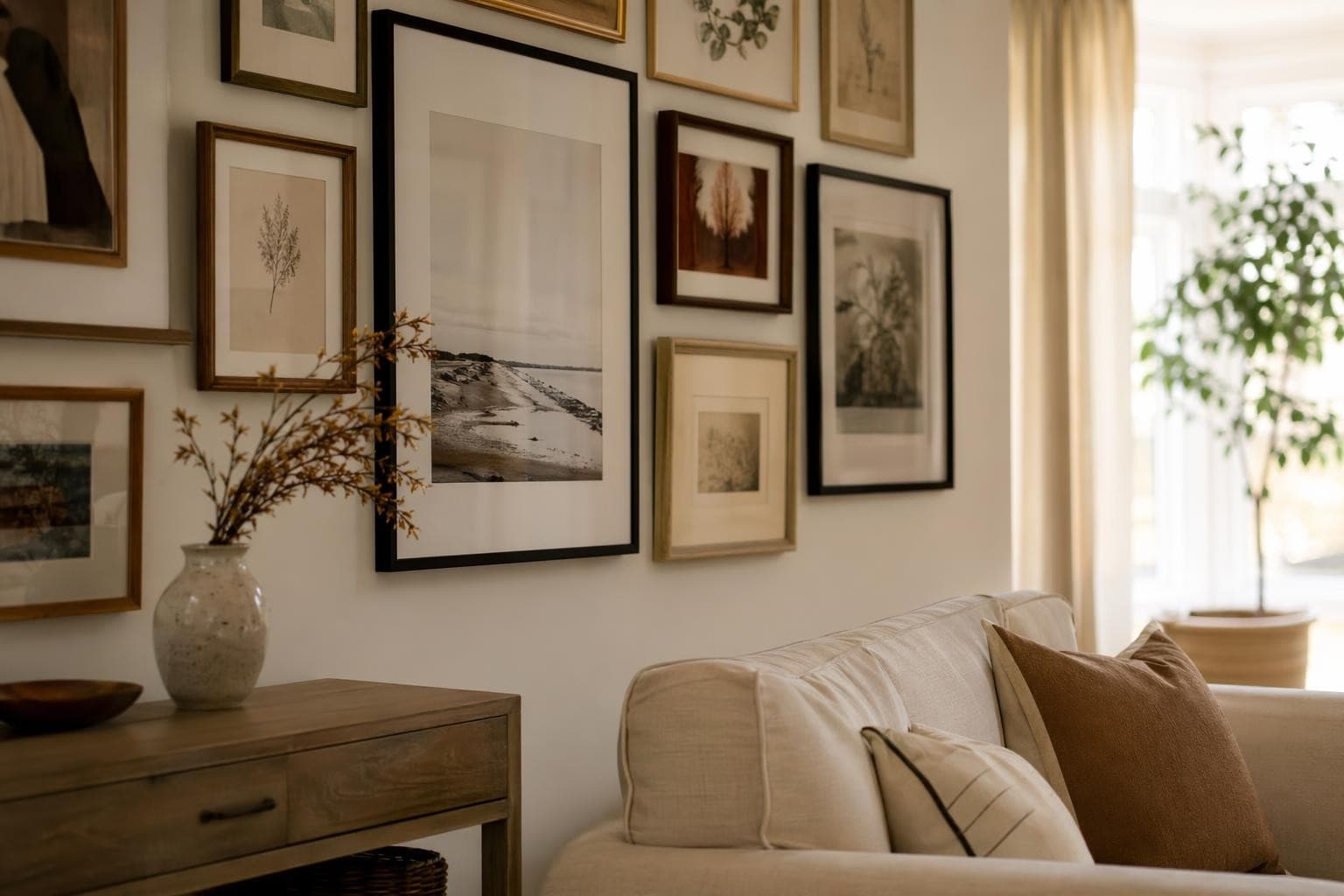
Scandinavian Living Room Ideas: Cozy Minimalism That Actually Works

There's a version of Scandinavian design that nobody actually wants to live in: white walls, no decor, furniture that looks like it arrived in flat boxes and never quite got warm. That's not what Scandinavian design is.
Real Scandinavian interiors are warm. They're layered with textiles. They prioritize comfort and candlelight. The Danish concept of hygge (roughly: coziness, contentment, togetherness) is baked into every design decision. Here's how to actually get there.
The Color Palette: Warm, Not Sterile
The Scandi palette is not pure white and gray. It's warm whites (think linen, cream, soft chalk), soft grays that lean warm rather than blue, muted dusty blues and sage greens, and the warm tones of natural wood throughout.
If your room feels cold and clinical, it's almost always because you went with a cool-toned white (blue or gray undertone) instead of a warm white (yellow or pink undertone). Try Benjamin Moore White Dove, Sherwin-Williams Alabaster, or Farrow & Ball Wimborne White. These are the workhorses of warm, Scandi-adjacent spaces.
Natural wood brings warmth that no paint color can replicate. Even one or two wood pieces — a coffee table, a side table, a set of shelves — will anchor the whole palette and keep the room from feeling sterile.

Sofa Selection: Clean Lines, Light Fabric
The sofa is your biggest investment and your most impactful decision. For a Scandinavian room, you want clean straight lines — no overstuffed cushions, no rolled arms, no tufted leather. Low-profile or mid-height legs in natural wood or brushed metal. Simple silhouette.
Fabric should be light: natural linen, cotton, or a light bouclé in cream, oatmeal, warm gray, or dusty blue. Budget range: $800–2,500 for a quality sofa in this style. IKEA's Söderhamn ($1,100) and Article's Sven or Timber series ($1,200–2,000) are well-regarded options.
Avoid: dark brown leather, overstuffed sectionals, anything with busy pattern or ornate detailing. These elements fight the visual quiet that makes Scandinavian rooms so restful.

Layered Textiles: Where the Coziness Actually Comes From
This is the most important and most underestimated element. Scandinavian living rooms feel warm because they layer soft things. A wool throw draped over the sofa arm ($40–80 for a solid option from Zara Home, H&M Home, or a thrift find). A sheepskin rug or sheepskin draped over a chair ($30–60). Two or three linen cushions in complementary earth tones.
A large area rug is non-negotiable. This is the one place to invest. A quality wool or wool-blend rug in a natural texture — jute, sisal, or low-pile wool in a neutral — grounds the whole room. Budget $200–600 for a rug that actually looks good. Going too cheap on the rug is the single fastest way to make a Scandinavian-inspired room look budget.
Layer textures intentionally. Smooth linen cushions next to a nubby wool throw next to a sheepskin. The contrast of textures is what makes the room feel rich even when the colors are all neutral.

Light Wood Furniture: Oak, Birch, Ash — Never Dark Stain
Wood is the backbone of Scandinavian interiors. The key is the species and finish. Oak, birch, and ash in their natural or lightly oiled finish are your targets. These woods have a pale, warm tone that keeps the room light while adding organic texture.
Avoid dark-stained wood at all costs — walnut stain, mahogany, espresso. These absorb light and fight the airy quality that defines the style. If you already have dark wood furniture you love, you can strip and re-oil it (a weekend project, about $30 in supplies), or balance it with extra light sources and lighter textiles.
Key light wood pieces to prioritize: a solid wood coffee table, open shelving in natural wood, and wood-legged seating. IKEA, CB2, and smaller Scandinavian brands like Muuto and Menu (now Audo Copenhagen) hit this aesthetic well at various price points.

Lighting: Multiple Sources, Always Warm
Scandinavians live with months of darkness in winter. They have perfected the art of interior lighting as a result. The rule: never rely on overhead lighting alone. Layer your light sources the same way you layer textiles.
You want: a floor lamp by the sofa (warm bulb, 2700K or lower), table lamps on side tables or shelves, pendant light over a reading corner or coffee table, and actual candles if that's your thing. Paper and rattan pendants are a signature of the style — Rattan pendants from $30–100 on Etsy or Amazon work just as well as the $400 designer versions from afar.
Bulb temperature matters enormously. 2700K is warm and golden. 3000K is slightly cooler but still warm. 4000K is cool white — avoid it entirely in living spaces. Replace every cool-white bulb in your living room and the room will instantly feel warmer without changing a single piece of furniture.
Indoor Plants: Greenery Is Not Optional
Scandinavian interiors almost always include plants. Not as a trend, but because bringing living things inside is part of the philosophy of connecting interior spaces to nature. In design terms it's called biophilic design. In practice it means your living room needs some greenery.
The classics: monstera deliciosa for a large floor plant (dramatic, beautiful, hard to kill), fiddle leaf fig for a statement corner plant (requires bright indirect light), pothos in a hanging planter (nearly indestructible, looks great trailing down a shelf). Pick one large plant and one or two small ones rather than a dozen small ones — it's more intentional and less botanical-garden.
Plant pots should match your palette: cream, white, terracotta, or natural textures. A beautiful matte ceramic pot from a local pottery studio ($15–40) looks far better than a plastic nursery pot, and it makes your plant look like a design choice rather than an afterthought.
Decluttered but Not Empty: Hidden Storage Is Key
Minimalism in the Scandinavian sense doesn't mean you own fewer things — it means your things have a home. Hidden storage is what makes a Scandinavian room look calm without requiring you to live like a monk.
A coffee table with a drawer or shelf below. An ottoman with storage inside. A sideboard or credenza with closed doors instead of open shelving. Baskets on shelves to contain the small things. Every object that doesn't contribute to the room's aesthetic should be inside something with a door or a lid.
The shelves that ARE open should be curated like a small gallery. 5–7 items max per shelf section. Books, a plant, one or two objects, breathing room. You're editing, not storing.
The Cozy Corner: Your Personal Hygge Spot
Every well-designed Scandinavian living room has a corner that's specifically designed for comfort. A reading nook. A place to sit with a cup of coffee and look out a window. A spot that's meant for resting, not entertaining.
Elements for your cozy corner: an accent chair with a sheepskin thrown over it, a small side table for your mug, a floor lamp positioned to read by, a basket of blankets within reach, a small stack of books. Total cost to build this corner: $150–400 depending on the chair.
A floor cushion or oversized pouf works if you don't have room for a second chair — a large linen floor cushion ($40–80) or a knit pouf ($50–120) creates a low-to-the-ground seating option that feels very Nordic. It also tucks away when not in use.
Frequently Asked Questions
Is Scandinavian design the same as minimalism? They overlap but aren't the same. Scandinavian design prioritizes warmth, function, and coziness — it allows more color and texture than strict minimalism. Hygge (the Danish concept of coziness) actually encourages softness and layers, which pure minimalism often avoids.
What colors work best in a Scandinavian living room? Warm whites, soft warm grays, muted sage green, dusty blue, and the natural tones of wood. The palette should feel calm and slightly earthy, not cool and clinical.
How do I make a Scandinavian room feel warmer? Three things immediately help: switch to warm bulbs (2700K), add a wool throw and sheepskin, and bring in at least one large plant. These three changes cost under $150 total and transform the feel.
Can I do Scandinavian style in a small living room? Yes — it's actually ideal for small spaces. The light palette, minimal furniture, and smart hidden storage make small rooms feel larger and less chaotic. A small Scandinavian living room often feels more spacious than a similarly sized room in a heavier style.
What's the best rug for a Scandinavian living room? A natural-fiber or low-pile wool rug in cream, warm gray, or oatmeal. Jute and sisal work well for texture. Avoid high-pile shag, dark colors, or busy patterns. The rug should be large enough for the front legs of all your furniture to sit on it.