Office Decor Ideas for Work That Actually Help You Focus
Your home office either helps you focus or quietly works against you. Most people set up their desk wherever there's space, throw up whatever they already own, and wonder why they feel distracted, tired, or just... off. The good news is that a few intentional changes — most under $100 — can genuinely shift how productive your workday feels. This guide covers the stuff that actually matters, with real prices and practical advice instead of vague design inspiration.
Where to Point Your Desk: Window vs. Wall
This is the single biggest decision in any home office, and most people get it wrong. Facing a wall with no window feels like you're working in a closet — it's psychologically claustrophobic even in a decent-sized room. Facing a window directly can mean glare on your monitor, which causes eye strain within an hour.
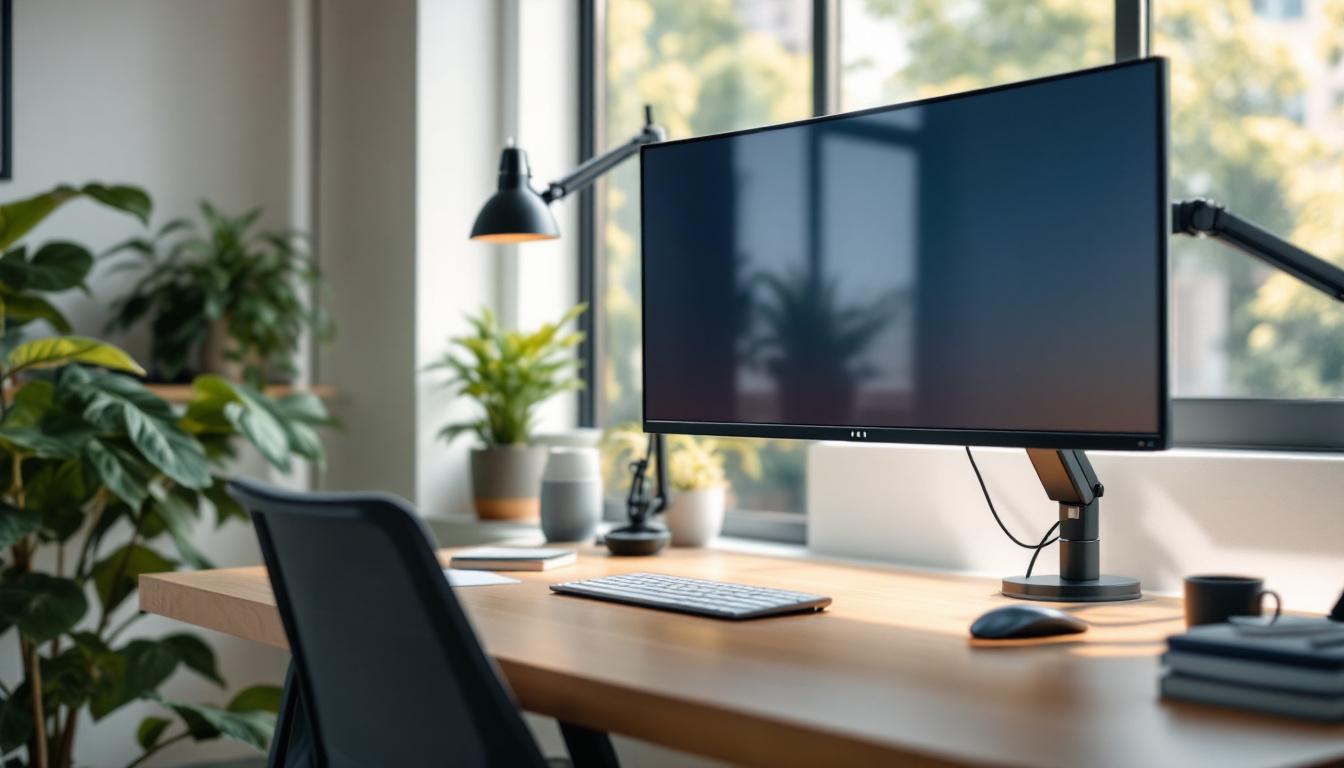
The best position: desk perpendicular to the window, so natural light comes from your side (left side if you're right-handed, to avoid hand shadows). This gives you natural light without monitor glare. Research consistently links natural light exposure during work hours to better alertness and mood — one study found workers near windows got 46 more minutes of sleep per night on average. Even if the science didn't back it up, working with daylight in your peripheral vision just feels better than staring at a wall under fluorescent light.
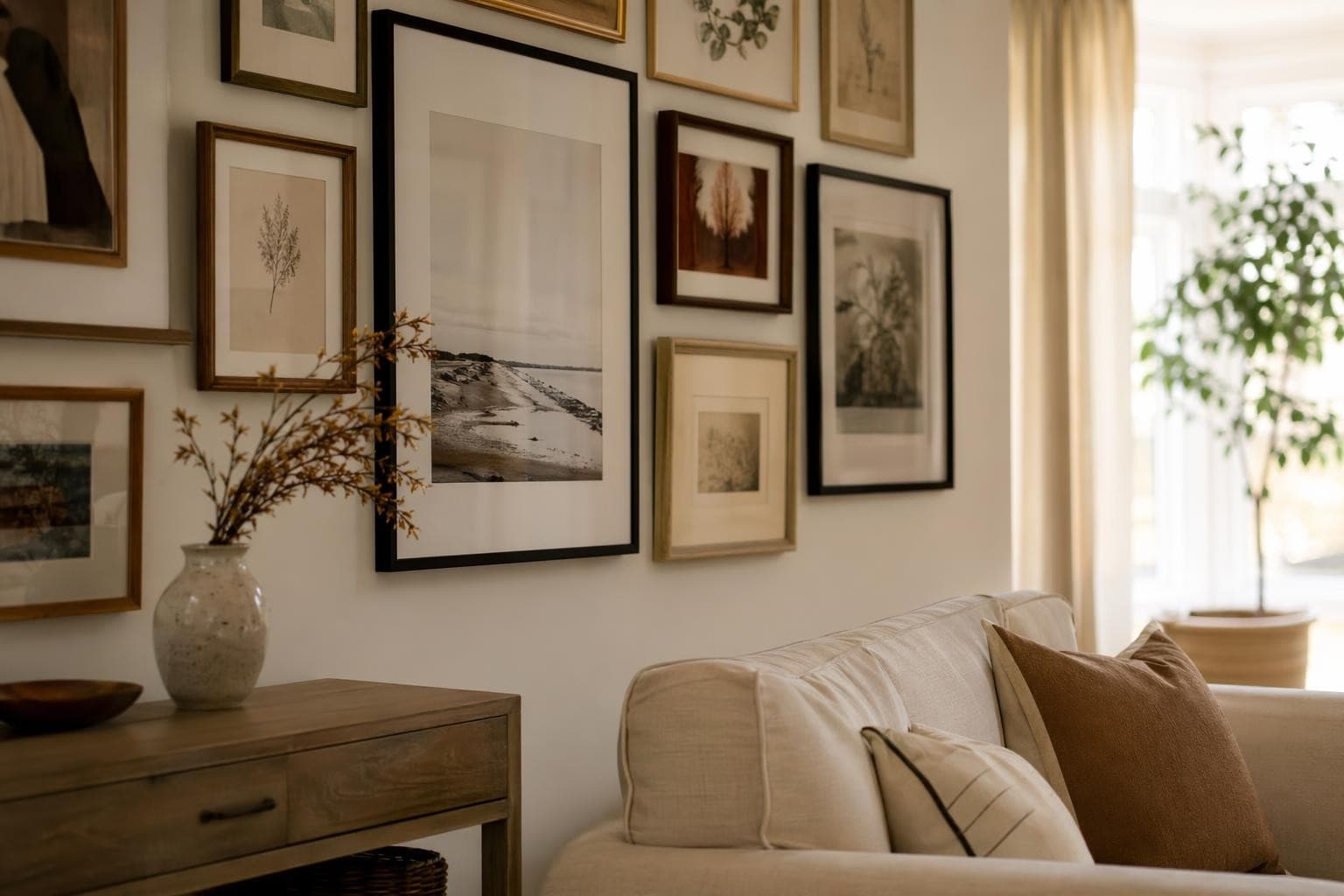
If you have no choice but to face a wall, put something interesting on it — a piece of art, a simple pegboard with clean organization, or a small floating shelf with a plant. A blank wall with nothing on it is a focus-killer.

Your Video Call Background Wall
You might not think about what's behind you during calls, but everyone else on the call is looking at it for the entire meeting. A messy background with laundry, a random door, or a pile of boxes signals disorganization even if your actual work is excellent. This matters more than people realize — first impressions and ongoing professional perception are shaped in part by your environment.
You don't need to spend a lot. A simple, clean wall with one or two intentional elements works well. A few ideas that photograph well on camera: a floating shelf with 2-3 small plants and a book or two ($30-60 for the shelf plus plants), a single large piece of art or a framed poster ($20-80 from Etsy or IKEA), or a simple pegboard with clean tool organization. Neutral or muted colors work best on camera — bright whites can blow out, and busy patterns are distracting. A warm off-white, soft sage, or medium gray reads well on most webcams.

Cable Management: The $30–50 Fix That Changes Everything
Cables are visual noise. Even a beautifully decorated office looks chaotic when there are six cords running in different directions. The before/after difference of proper cable management is legitimately dramatic — the same desk can look like a different room.
For $30-50, you can solve most cable problems: cable raceways stick to walls and hide cords running along baseboards ($12-20), a cable management box hides your power strip and excess cords under the desk ($20-35), velcro cable ties bundle cords together neatly ($8 for a pack of 100), and adhesive cable clips route cords along desk edges ($10). Start by unplugging everything, grouping cords by destination, and routing them together before clipping or tucking. The goal isn't to hide every cable — it's to make them intentional and grouped rather than random.

Plants That Actually Survive Office Light
Plants make a real difference to how a workspace feels — they reduce stress, add a bit of life to an otherwise flat environment, and improve air quality in small ways. But most office environments are low-light, which kills the plants people normally buy, and then they give up on the idea entirely.
Four plants that genuinely tolerate office conditions: Pothos (nearly indestructible, trails nicely from a high shelf, $5-15), Snake plant / Sansevieria (upright, architectural, thrives on neglect, $10-25), ZZ plant (glossy dark leaves, handles low light and irregular watering, $15-30), and Peace lily (actually prefers low light, has white flowers, $12-20). All four are available at most hardware stores and big-box retailers. One medium plant on your desk or a small one at the corner is enough — you don't need a jungle.

Wall Organization: Pegboards, Shelves, and Magnetic Boards
If your desk is always cluttered, the problem is usually lack of vertical storage. Your desk surface should have almost nothing on it except what you're actively using — everything else belongs on the wall or in a drawer.
A pegboard above your desk is one of the most useful things you can put in a home office. A 2x4 foot pegboard runs $30-60 at hardware stores, plus $15-25 for hooks and accessories. You can hang monitors (with the right arm), put up small shelves, hang headphones, keep notebooks, and arrange it exactly how you work. It keeps things visible but off the desk surface. If pegboard feels too industrial, floating shelves at different heights (IKEA LACK shelves are $8-15 each) give you storage without making the room look like a garage workshop. Magnetic boards work well for notes, cards, and lightweight tools — a good option above the monitor to keep reference materials visible without covering your desk.
Lighting for Screen Work (This One Actually Matters)
Overhead lighting — especially when it's directly above you — creates glare on your monitor and makes your face look terrible on video calls (harsh shadows under your eyes). Most home offices have only overhead lighting, which is one reason working from home causes more eye strain than people expect.
The fix: get a good desk lamp and position it at roughly 45 degrees to your monitor, so it lights your workspace without bouncing off the screen. LED desk lamps with adjustable color temperature (warm for evenings, cool-white for focused work) run $50-150. Brands like BenQ, TaoTronics, and Elgato make solid options in this range. A secondary benefit of a desk lamp positioned for work: it also lights your face nicely for video calls if you set it just right. For calls specifically, the light source should be in front of you, not behind — never have a bright window behind you during calls or you'll appear as a silhouette.
Personal Touches Without Clutter
A completely sterile office is its own kind of focus problem — there's nothing interesting to rest your eyes on, and the environment feels oppressive. But a cluttered office is obviously worse. The sweet spot: 3-5 meaningful items on your desk surface, maximum. One photo, one plant, one small decorative object (a nice mug, a small sculpture, something with texture). That's it. Everything else either has a specific storage location or it doesn't belong in the room.
The items you choose should be things that genuinely mean something to you rather than things that look like 'office decor.' A photo from a trip you loved, a small gift from someone important, a memento from a project you're proud of. These things remind you why you're working, which turns out to be a real productivity factor — psychologists call it 'meaning in work environment.' On the walls, the same principle applies: a few meaningful pieces beat a grid of generic prints.
Color for Focus: What Actually Works
Color psychology in offices is real, though often overstated. The short version: blue and green tones are consistently associated with calm focus and are the best choices for walls in a work environment. Soft blue (think dusty blue or slate), sage green, or muted teal all read as calming and professional without being boring. These colors work especially well if your work involves sustained concentration — writing, coding, analysis.
Avoid red in work spaces — it's energizing in short bursts but associated with stress in sustained exposure. Bright yellow is similarly overstimulating for long sessions. White is fine but cold — warm whites or off-whites are noticeably better. If you're renting and can't paint, a large piece of art or a removable wallpaper accent panel behind your desk can shift the visual temperature of the room without touching a paintbrush. Peel-and-stick wallpaper runs $30-80 for a small accent area and looks significantly better than it sounds.
The bottom line: your office doesn't need to be magazine-perfect. It needs to be clean, well-lit, and set up so that the environment is working for you rather than against you. Each change here is small on its own — cable management, a desk lamp, one good plant, desk position — but together they add up to a space where you actually want to spend eight hours.
Frequently Asked Questions
What is the best color for a home office to improve focus? Blue and green tones — specifically soft blues, sage green, and muted teals — are consistently the best for sustained focus work. They're calming without being sleep-inducing, and they photograph well for video calls.
Should my desk face the window or face away from it? Neither directly toward nor directly away. The best position is perpendicular to the window — light comes from the side, reducing monitor glare while still giving you the benefits of natural light.
How many plants are too many for a home office? One to three plants is the sweet spot. Enough to add life and a bit of air quality benefit without becoming a distraction or taking up desk real estate you need for actual work.
How much should I budget for a basic home office makeover? You can meaningfully improve most home offices for $150-300: a desk lamp ($50-100), cable management supplies ($30-50), one or two plants ($15-30), and wall organization like a pegboard ($40-80). Painting, if you own your place, adds another $50-100 for a single room.
What should I put on the wall behind me for video calls? Keep it simple and intentional. One piece of art or a floating shelf with 2-3 small plants and a book works well. Neutral or muted colors read best on camera. Avoid anything too busy, too bright, or too personal — a professional but warm background helps how others perceive you on calls.