Modern Home Office Ideas for Remote Workers (2026)

The home office has had five years to mature since the mass shift to remote work, and the setups that work have become a lot clearer. We know what makes people more productive, less tired, and better on video calls — and it's mostly not about aesthetics. Modern home office design in 2026 is about ergonomics you'll actually use, tech that stays out of the way, and a space that doesn't feel like a repurposed guest bedroom. Here's what's worth spending money on and what's mostly noise.
Standing Desk Setup: What to Buy and How to Use It
Electric height-adjustable desks went from a luxury item to a standard piece of remote work furniture over the past few years, and the price has dropped significantly. A solid adjustable desk from Flexispot, Uplift, or Autonomous now runs $300-700 — down from $700-1,200 when they first became popular. These are the brands most remote workers actually use daily, not the $150 versions from Amazon that wobble at the slightest touch.
The research on standing desks is honest: standing all day is not better than sitting all day — it just trades one set of problems for another (back fatigue, leg strain). What actually works is alternating. The commonly recommended split is 45-60 minutes sitting, then 15-20 minutes standing, then repeat. Most adjustable desks have programmable presets so you can switch heights at the press of a button. If you're not using presets, you probably won't use the standing function consistently — set them up when you first get the desk.
One thing people miss: an anti-fatigue mat is nearly as important as the desk. Standing on hard floor for 20 minutes at a stretch becomes uncomfortable fast and discourages the habit. A good anti-fatigue mat ($40-80) makes standing sessions comfortable enough to actually complete.

Monitor Arm: The $30–80 Upgrade That Frees Your Desk
A monitor on a stand takes up a significant footprint on your desk and locks you into one fixed height and angle. A monitor arm clamps to the desk edge, gets the stand off the desk entirely, and lets you move the monitor anywhere — perfect height, perfect angle, swung out of the way when you need more desk space, and tilted for a collaborator to see your screen without craning.
The right ergonomic monitor height: the top of the screen should be at or slightly below eye level when you're sitting (or standing, if adjustable) with good posture. Most people have their monitors too low, which means you spend eight hours a day looking slightly down, which causes neck strain over time. A monitor arm fixes this in about 10 minutes. Amazon Basics, Ergotron, and VIVO all make reliable arms in the $30-80 range. The more expensive Ergotron arms ($80-120) have better weight ratings and smoother adjustment — worth it for larger/heavier monitors.
Bookshelf as Room Divider for Open-Plan Homes
One of the more common modern home challenges is that there's no dedicated office room — the workspace is in a living room, bedroom, or open-plan space. Working without any visual separation from the rest of your home makes it psychologically harder to switch into work mode and back out of it. The separation matters even if it's not fully acoustic.
A freestanding bookshelf positioned perpendicular to a wall creates a soft room divider without any construction. A 6-foot bookshelf (like the IKEA KALLAX or BILLY series, $60-150) used as a divider defines the workspace, provides storage, and creates a background for video calls simultaneously. If you want more privacy, add woven storage baskets on some of the shelves to break sightlines further. The back of the bookshelf (the side facing the living room) can be wallpapered or backed with fabric for a more finished look — several people have done this with removable wallpaper for around $30.

Acoustic Panels: No Longer Just for Recording Studios
Echo and background noise on video calls was the most common complaint about home offices in 2020-2021. Five years on, acoustic panels have improved significantly in both effectiveness and appearance — they now come in designer colors and geometric patterns that look intentional rather than industrial.
For a home office, you don't need full acoustic treatment — just enough to reduce the flutter echo that makes voices sound hollow on calls. 4-6 acoustic panels ($50-150 total) placed on the wall behind your monitor or on the side walls makes a noticeable difference in call quality. Brands like Acoustic Fields, ATS Acoustics, and SoundSkins all sell panels that are designed to look good on a wall rather than scream 'recording studio.' The hexagonal felt panels (which look like honeycomb sections) are particularly popular in 2026 home offices — they come in 15-20 colors and read as a design element rather than a functional fix.

Biophilic Design: The 2026 Home Office Trend That's Actually Backed by Research
Biophilic design — incorporating natural elements like plants, wood, stone, and natural light into interior spaces — has been a design buzzword for a few years, but in 2026 it's moved from aspirational to practical. The research on it is solid: workers in environments with natural elements report lower stress, higher focus, and better mood compared to those in purely artificial environments.
For a home office, this doesn't mean installing a living wall ($2,000+). It means: at least one live plant (see the office plants section in our other guide — pothos, snake plant, or ZZ plant all survive low-light offices), a wood desk surface or wood elements rather than all-glass-and-metal, maximizing natural light by positioning your desk near a window, and using natural fiber materials where possible (a wool or cotton desk mat rather than plastic, for example). These are small choices that collectively shift how the space feels over an eight-hour workday.
Storage That Doesn't Look Like Storage
Open shelving has had a long run in interior design, but for home offices it's often the wrong choice. Open shelves require active curation to look good — the moment you put actual work supplies on them (staplers, printer paper, cables, notepads, random chargers), they look like a mess. Closed-front cabinets and drawers hide working mess and make the space look significantly cleaner with zero effort.
The modern approach: one or two open shelves for curated decorative items (books you've actually read, one or two plants, a single piece of art or object), and closed storage for everything functional. IKEA PAX wardrobe units used as office cabinets ($150-300 depending on size) are surprisingly common in home offices now — they look like built-ins, have huge storage capacity, and keep everything out of sight. Filing cabinets with a wood top surface double as a side table while hiding paperwork.
Color Psychology for 2026: Sage Green, Warm Navy, and Warm Neutrals
The all-white or all-gray home office is on its way out. 2026 design trends strongly favor warmer, more saturated tones that make spaces feel lived-in and calming rather than clinical. Three colors that are particularly well-suited to home offices right now:
Sage green: muted, warm, pairs well with wood and natural materials. Feels calming without being cold. Benjamin Moore's 'Pale Avocado' and Sherwin-Williams 'Privilege Green' are popular current choices. Reads well on camera for video calls.
Warm navy: deep but not dark-feeling when balanced with light furniture and good lighting. Works well on a single accent wall behind the desk rather than all four walls. Makes the space feel serious and intentional without being oppressive.
Warm neutrals (greige, warm taupe, warm white): the safe choice for renters or anyone who wants a flexible backdrop. These don't require painting all four walls — even an accent wall behind the desk in one of these tones shifts the whole room's feel.
Tech Integration: Wireless Charging, Hidden Cable Trays
A modern home office in 2026 should have as few visible cables as possible. Two specific upgrades that make a big difference:
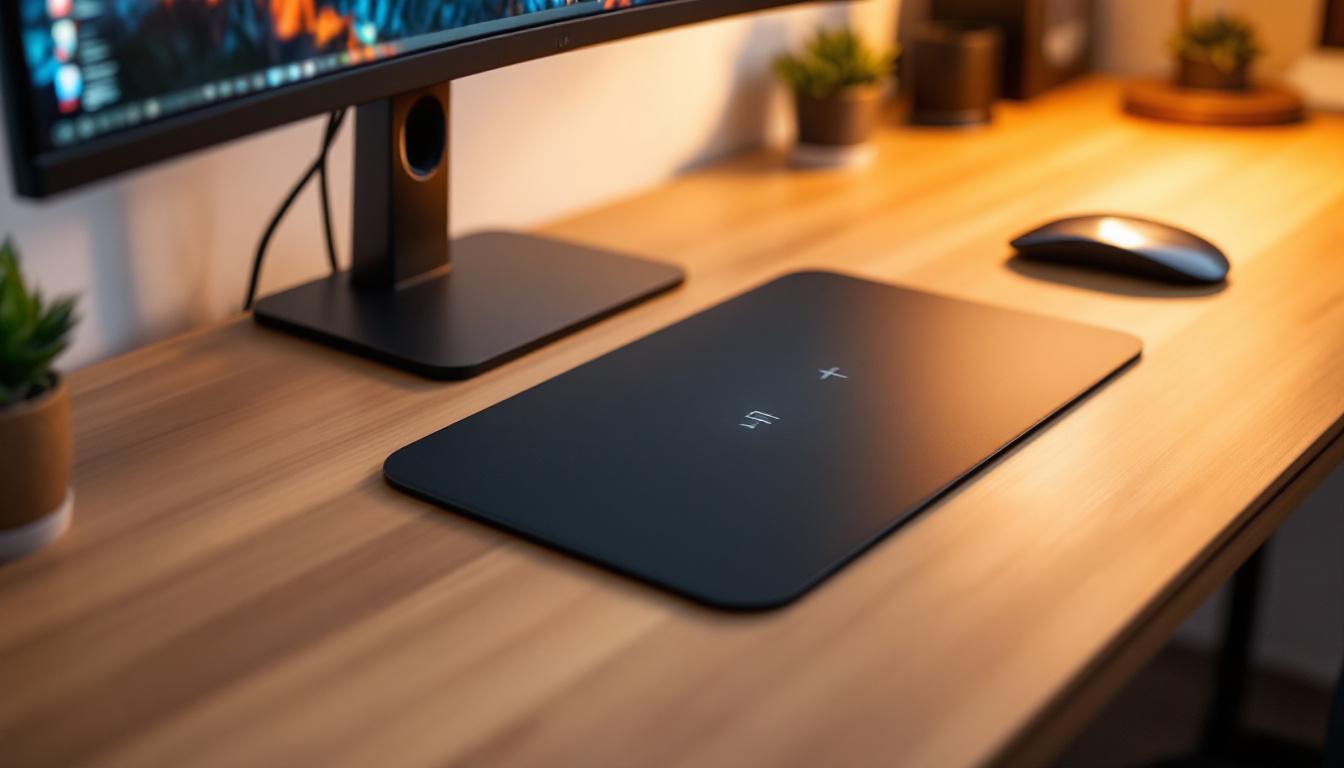
Wireless charging pad built into or placed on the desk: a surface-mounted wireless charging pad ($20-50) means your phone, earbuds, and smartwatch charge without any cables. You set things down and they charge — no fishing for cables, no tangled cords on the desk surface. Some desk manufacturers now offer desks with built-in wireless charging; you can also get aftermarket pads that sit flush with a hole cut in the desk surface.
Hidden cable tray under the desk: a simple mesh or metal cable management tray ($20-40) mounts under the desk surface and holds your power strip, adapter bricks, and excess cable length completely out of sight. From the front, the desk looks clean. From underneath, everything is organized and accessible. This is probably the highest-impact-per-dollar upgrade you can make to any existing desk setup.
The modern home office isn't about following trends — it's about setting up a space where you can do your best work without fighting the environment. A standing desk you actually use, lighting that doesn't cause headaches, storage that keeps clutter invisible, and a space that looks and feels like it was designed for work rather than just adapted from something else. Each piece of this is achievable for most people within a $500-1,000 budget spread over a few months of deliberate upgrades.
Frequently Asked Questions
How much should I spend on a standing desk? A reliable electric height-adjustable desk costs $300-700 from brands like Flexispot, Uplift, or Autonomous. Anything significantly cheaper is likely to have motor issues or wobble at standing height within a year of daily use.
Do acoustic panels actually make a difference on video calls? Yes, noticeably. Even 4-6 panels on the wall reduce the hollow echo that makes voices sound distant on calls. Modern acoustic panels come in designer colors and patterns and look like intentional wall decor rather than soundproofing material.
What is biophilic design and how do I add it to a home office? Biophilic design incorporates natural elements — plants, wood, natural light, natural fibers — into interior spaces. For a home office, this means: a live plant, a wood desk surface or wooden elements, maximizing natural light, and natural fiber materials like a wool desk mat. It's been consistently shown to reduce stress and improve focus compared to all-artificial environments.
Should a home office have open or closed storage? Closed storage is better for offices. Open shelves look good when curated but quickly look cluttered when loaded with actual work supplies. Use closed cabinets or drawers for everything functional, and reserve one or two open shelves for a few intentional decorative items.
What are the best 2026 home office color trends? Sage green, warm navy, and warm neutrals (greige, warm taupe) are the dominant trends replacing the all-white and all-gray offices of earlier years. These colors feel calming, read well on video calls, and pair naturally with wood furniture and biophilic design elements.