Master Bathroom Ideas That Feel Like a Spa (Without the Spa Price Tag)
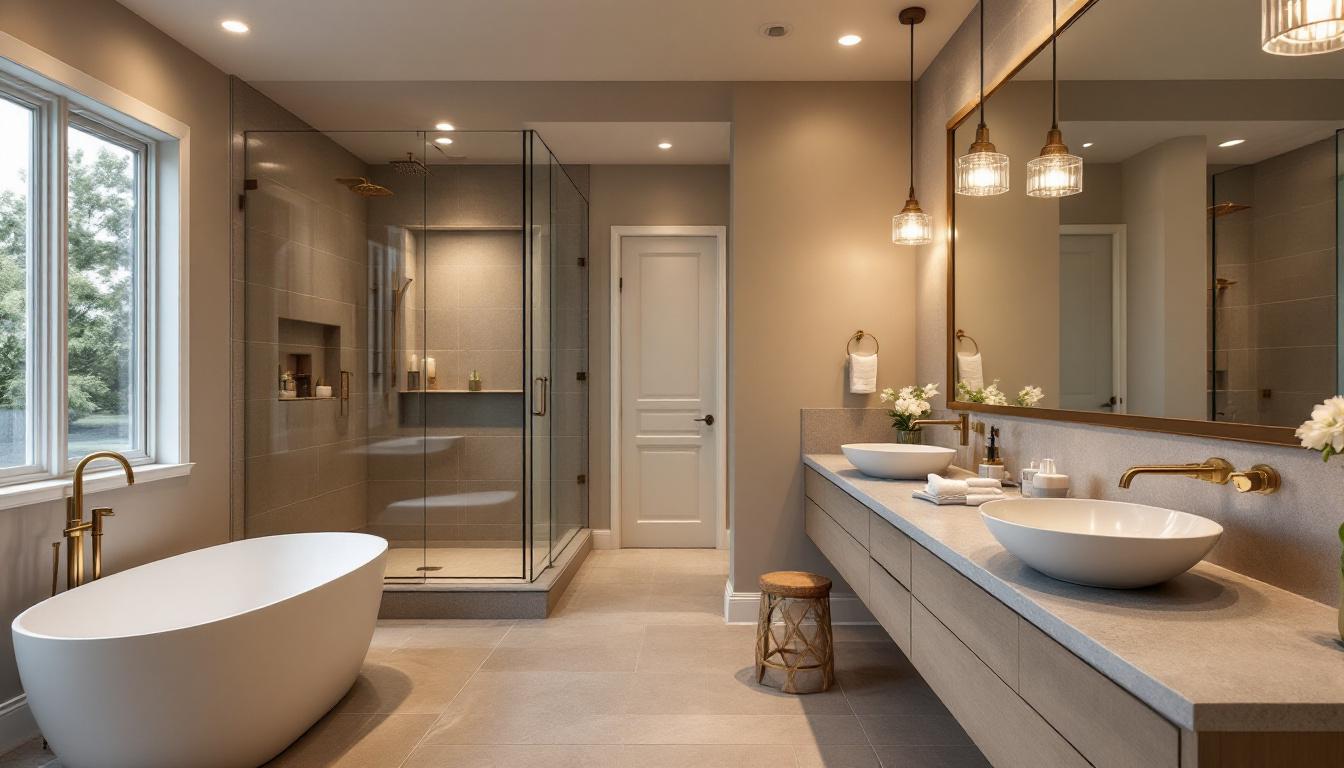
A master bathroom is the one room in the house that's purely for you. Not for guests, not for kids, not for anyone who's visiting — just the two of you (or just you) starting and ending every day. That makes it worth getting right, and the good news is that the difference between a bathroom that feels like a hotel spa and one that just functions is rarely a $50,000 renovation. It's almost always a series of specific, well-considered decisions.
Here's how to think through each of the major master bathroom decisions — from layout to lighting to the finishing touches that cost very little but land very hard.
Freestanding Tub vs Walk-In Shower: What 2026 Is Actually Choosing
The freestanding tub had its decade. Bathtub photos in Instagram-worthy bathrooms drove a wave of renovations where people installed statement soaking tubs — and then rarely used them. In 2026, the walk-in shower is winning the space allocation battle in primary bathrooms.
The data from real estate agents is consistent: buyers with young children still want a tub somewhere in the house (even a secondary bathroom works), but most adult buyers prioritize a large, well-appointed walk-in shower over a soaking tub. If you're renovating a master bath primarily for your own use and you don't use a tub regularly, putting that square footage into a better shower is almost always the right call.
That said, if you're optimizing for resale value in a high-end market, a freestanding tub still reads as a luxury marker to certain buyers — particularly in homes over $800K where the buyer pool expects it. A good rule of thumb: if your home is under $600K and you have at least one other bathtub in the house, skip the freestanding tub and invest that budget in the shower.

Double Vanity Essentials: Sizing, Height, and What Actually Matters
A double vanity is one of the most requested features in master bathroom remodels, and for good reason — sharing a single sink is a daily friction point that a renovation can eliminate permanently. The minimum width for a comfortable double vanity is 60 inches. At 60 inches, you have two functional sinks with enough counter space on either side. At 72 inches (6 feet), each person has their own distinct zone.
Height is a detail that most vanity selections get wrong. Standard vanity height is 32-34 inches, which was designed for a shorter average population. Comfort height, also called ADA height, is 36 inches — the same as kitchen counters. In 2026, 36-inch height vanities are trending heavily because they eliminate the back-bending posture required at a lower sink. If you're having a custom vanity built or choosing a semi-custom option, specify 36 inches.
For the sink configuration: undermount sinks look cleaner and are easier to wipe around. Vessel sinks (sitting on top of the counter) look dramatic but require a lower counter height to compensate and make the faucet selection more complicated. Undermount is the practical choice for a daily-use master bath.

Flooring: Heated Floors, Large Format Tile, and Why Size Changes the Room
Heated floors in a bathroom are one of those upgrades that people who have them cannot imagine living without. Electric radiant heat mats are installed under the tile and connected to a wall thermostat. Cost: $8-12 per square foot installed, with a typical 100-square-foot master bath running $800-1,200 total. The thermostat runs on a timer so the floor is warm before you step out of the shower — not a luxury that costs much to run (a 100 sqft heated floor uses roughly the same electricity as a hair dryer, but only for 30-60 minutes in the morning).
Tile size is one of the simplest ways to make a bathroom feel bigger without moving any walls. Large format tiles — 24x24, 24x48, or even 12x24 — have fewer grout lines, which reduces visual choppiness and makes the floor read as one continuous surface. In an 80 square foot master bath, switching from 12x12 tile to 24x24 can make the room feel 15-20% larger just from the reduction in grout lines.
For finish: matte or honed tile is trending over polished in 2026. Polished tile shows every water spot and footprint. Matte tile hides imperfections between cleanings and tends to be less slippery when wet — an important safety consideration in a bathroom.

Color Palette: Warm Earth Tones Are Replacing White and Gray
The cool gray-and-white bathroom palette that dominated 2015-2022 is being replaced by warmer, earthier tones. Warm beige, greige (gray-beige), warm white (with yellow or pink undertones rather than blue), terracotta accents, and sage green are the colors showing up in high-end residential projects and trickling into mainstream remodels.
The practical benefit of warm tones beyond aesthetics: they're more flattering under the warm lighting that most bathrooms have. Cool gray walls under warm vanity lighting often read lavender or lilac in the actual room, not gray. Warm tones read true.
If you're not ready to commit to a full warm tone palette, the simplest bridge is warm white tile (Benjamin Moore White Dove or Swiss Coffee in paint terms — look for tile versions with similar undertones) with natural wood-tone vanity and warm-toned hardware in brushed brass or bronze. That combination is minimal, timeless, and unmistakably current.

Lighting Layers: Why Vanity Sconces at Eye Level Beat Overhead Lighting
Most bathrooms are lit exclusively from overhead, which creates unflattering downward shadows on your face — the exact opposite of what you want when you're looking in the mirror to apply makeup, shave, or check how you look before leaving the house.
Vanity sconces mounted at eye level on either side of the mirror — roughly 60-65 inches from the floor to the center of the fixture — provide side lighting that fills in shadows and gives you accurate color rendering. This is the same principle used in professional makeup studios. If you have a double vanity, one sconce between the two mirrors (or two sconces flanking each mirror section) provides balanced light across the full width.
Layer your bathroom lighting: overhead for general function (a flush mount or recessed), vanity sconces for task lighting at the mirror, and optionally a small dimmer-controlled ceiling fixture or LED strip above the shower for separate shower ambiance. Dimmers on all circuits make the bathroom work as a relaxation space in the evening rather than only a bright utility room in the morning.
Storage: Medicine Cabinets Are Back, and Floating Shelves Fill Gaps
Medicine cabinets went out of fashion during the mirror-with-shelf era, but they're coming back — and it makes sense. A recessed medicine cabinet disappears into the wall, provides significantly more storage than a flat mirror, and keeps toiletries behind a closed door rather than on display. Newer medicine cabinet designs in brushed brass, matte black, and frameless glass look nothing like the builder-grade versions that gave them a bad reputation.
Surface-mount medicine cabinets (no recessing required) are a renter-friendly or renovation-avoiding option. They do project from the wall, but modern designs in the right finish don't look awkward. IKEA's Storjorm and similar budget options start around $80-120.
Floating shelves above the toilet or beside the vanity provide open storage for towels, candles, and plants. The key is editing what goes on them — a floating shelf with six different products and a candle and a plant looks cluttered; a floating shelf with two rolled towels and a small plant looks intentional. Less is more, always.
Spa Touches Under $500: Small Upgrades That Change How Your Bathroom Feels Every Day
You don't need to gut your bathroom to make it feel like a spa. These are the specific upgrades, in rough order of impact per dollar, that get the biggest reaction with the least disruption.
Rainfall showerhead ($80-200): Swapping your standard showerhead for a ceiling-mounted or arm-mounted rainfall head is a 30-minute DIY job with no plumbing knowledge required. The experience difference is immediate — a wide-coverage rainfall head makes an everyday shower feel indulgent. Brands like Moen, Delta, and Kohler have solid options in the $100-150 range.
Warm towel rack ($100-200): A plug-in electric towel warmer mounts to the wall, plugs into a standard outlet, and keeps your towels warm and dry. No hardwiring needed. The experience of stepping out of a shower to a warm towel is the single best spa upgrade that costs under $150.
Eucalyptus bundle ($10-15): Fresh eucalyptus hung from the showerhead with a rubber band releases essential oils in the steam. It smells like an actual spa, lasts 2-3 weeks per bundle, and costs less than a magazine. Replace when it dries out and loses its scent.
Better towels ($30-80 for a set): Turkish cotton or waffle-weave towels dry faster than standard cotton, feel substantially better, and look better folded on a shelf or hung on a hook. This is one of the easiest upgrades and one that you interact with twice a day.
Dimmer switches ($15-40 each): Adding a dimmer to your vanity lights and/or overhead light transforms the room from daytime utility mode to evening relaxation mode. A $25 dimmer installed in 20 minutes changes how you use the room at night.
Frequently Asked Questions
How much does a master bathroom remodel cost in 2026? A mid-range master bathroom remodel (new tile, double vanity, updated fixtures, new shower) runs $15,000-35,000 depending on square footage and material choices. High-end projects with custom tile work, steam showers, and heated floors can reach $60,000+. Budget projects updating only fixtures and finishes without moving walls run $3,000-8,000.
Does a master bathroom remodel add home value? Yes — bathroom remodels recover 60-70% of their cost on resale on average according to Remodeling Magazine's Cost vs Value Report. A master bathroom remodel has a higher emotional impact on buyers than almost any other renovation, which sometimes translates to above-average recovery rates in competitive markets.
What master bathroom features do buyers want most in 2026? Double vanity (non-negotiable for most buyers), large walk-in shower (4x4 minimum, preferably larger), heated floors (a differentiator), and storage. Freestanding tubs are nice-to-have but no longer driving decisions the way they did in 2018-2021.
What is the most cost-effective master bathroom upgrade? Replacing fixtures (faucets, showerhead, towel bars, toilet paper holder) in a coordinated finish (all brushed brass, all matte black, all brushed nickel) is the upgrade with the highest perceived-value-to-actual-cost ratio. New hardware across a full bathroom runs $200-500 and makes a 10-year-old bathroom feel current again.
How can I see what my master bathroom would look like before remodeling? Upload a photo of your current bathroom to a tool like StableRender and generate a photorealistic AI render showing how your proposed changes would look — different tile patterns, vanity styles, color palettes, or even a freestanding tub vs walk-in shower — before committing to any demolition.