Luxury Bedroom Ideas That Look Expensive but Aren't

A luxury bedroom doesn't come from spending $10,000 on furniture. It comes from a handful of specific decisions that most people don't make because nobody told them what they were. The difference between a bedroom that looks like a hotel suite and one that just looks like a bedroom is usually not the price of the furniture — it's the proportion of the rug, the height of the curtains, the layering of the bedding, and how the lighting is controlled. These things cost money, but far less than you'd think.
Here are eight changes that will get your bedroom 90% of the way to looking genuinely luxurious. Real costs included at each step.
Upholstered Headboard: The Fastest Single Upgrade
If you have no headboard, or a cheap metal one, or a sad wooden slat situation — an upholstered headboard is the single upgrade that will make the biggest visual difference in the shortest time. Upholstered headboards read as expensive because they're substantial, textured, and require craft to produce. They also make a bedroom feel finished in a way that nothing else does quite so immediately.
Budget range: $200 to $600 for a queen or king. Under $200 you start getting into thin foam and cheap fabric that won't hold up. Over $600 you're into custom or designer territory. The sweet spot is $300 to $500 for a well-padded, well-constructed piece. Velvet and bouclé are the most popular upholstery choices right now — both photograph beautifully and have enough texture to anchor a room. Look at brands like Wayfair, Article, and Joss & Main for options in this range.
The headboard should extend above the pillows — tall headboards (48 to 60 inches from the floor) make the ceiling feel higher and give the bed commanding visual presence in the room. A headboard that's only a few inches above the pillows looks like an afterthought.

Hotel-Style Bedding: The White Duvet Formula
Luxury hotels use a specific bedding formula that you can replicate at home for $150 to $300 total. The formula is: a white or cream duvet cover as the base, layered with two sleeping pillows plus two to four Euro shams (the larger square pillows that lean against the headboard), topped with a textured throw folded at the foot of the bed. That's it. It looks like a lot, but each element is inexpensive on its own.
The duvet insert matters. A thin, flat duvet is the most common mistake people make — luxury bedding looks luxurious because the duvet is thick and full, not limp. A 650-fill-power down or down-alternative duvet insert adds the loft that makes the bed look like a cloud. These run $80 to $150 at the queen size. The cover can be any quality you like since it's washable, but a duvet without a full insert underneath looks sad regardless of the fabric.
The throw at the foot of the bed adds texture and color without committing to a pattern on the whole bed. Chunky knit, faux fur, or a woven wool throw — fold it in thirds widthwise and drape it across the bottom third of the bed. It takes 10 seconds and makes the bed look deliberately styled.

Nightstand Styling: The Rule of Three
Interior designers style surfaces in odd numbers because they're visually more interesting than even groupings. For a nightstand, three items is the sweet spot: a lamp, something to read (a book or small stack of books), and one more object — a small plant, a candle, a sculptural tray. That's the whole formula.
The lamp is the most important piece. A table lamp with a linen or fabric shade casts warm light and reads as intentional. A bare bulb or an LED strip taped to the headboard doesn't. Vary the heights of the three objects slightly — the lamp tallest, the book or plant mid-height, the candle or small object low. This creates a visual rhythm that photographs well and feels considered in person.
Keep the charging cables out of sight. A small nightstand tray corrals them and hides them from view — a $20 ceramic or marble tray transforms a cable pile into something that looks like it belongs there.

Floor-to-Ceiling Curtains: The Free Height Trick
The curtain mistake that makes rooms look cheap: hanging the rod directly above the window frame, with curtains that stop at the sill. The fix that makes rooms look expensive: hang the rod 4 to 6 inches above the window frame (or at the ceiling if you can), and use floor-length curtains that touch or puddle slightly on the floor. This makes the ceiling feel higher without changing anything structural. It's an optical illusion that costs nothing extra if you're buying curtains anyway.
Curtain panels for a bedroom run $50 to $150 each (you typically need two per window). Blackout lining is worth the upgrade in a bedroom — it improves sleep quality and makes the curtain fabric look heavier and richer than a sheer would. Linen and velvet are the most popular luxury-look choices right now. Linen is forgiving of wrinkles and has a relaxed, organic quality. Velvet is more dramatic and works best in rooms with a moody, intentional color palette.
Layered Lighting: Why One Overhead Light Isn't Enough
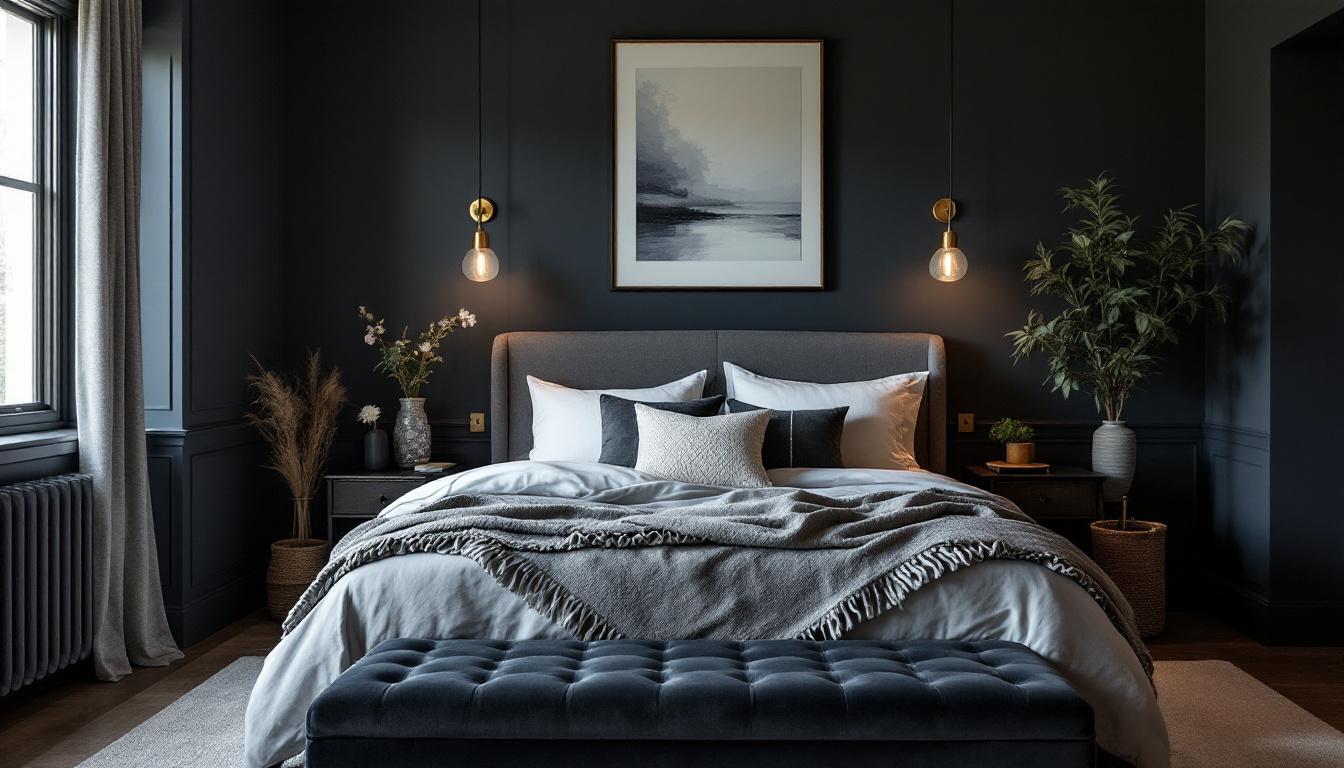
Every luxury bedroom has at least three sources of light operating at different heights and intensities: an overhead on a dimmer, bedside lamps, and accent lighting (a floor lamp in the corner, LED strips behind the headboard, or lit shelving). The reason is simple — a single overhead light at full brightness makes a bedroom feel like an exam room. Layered lighting lets you control the mood based on what you're doing.
Adding a dimmer switch to an existing overhead fixture costs $15 to $25 and takes about 20 minutes with a screwdriver. It's the easiest upgrade on this list. Bedside sconces (wall-mounted lamps instead of table lamps) free up the nightstand surface and look inherently more designed — expect to pay $60 to $200 per sconce, and they do require an electrician if there's no existing wall outlet at the right height, or you can use plug-in sconces to avoid wiring.
Rug Sizing: Why Most Bedroom Rugs Are Too Small
The most common rug mistake in bedrooms is going too small. A rug that just peeks out from under the foot of the bed looks like a mistake. The rule: in a bedroom, the rug should extend at least 24 inches past each side of the bed. For a queen bed, that means an 8x10 rug minimum. For a king, a 9x12. When you step out of bed in the morning, your feet should land on rug, not cold floor.
A properly sized rug makes the entire room feel more expensive because it grounds the furniture and unifies the space. An undersized rug makes the furniture look like it's floating randomly. For budget-conscious options, Ruggable and Amazon's Safavieh/Artistic Weavers lines have 8x10 options in the $200 to $400 range. For higher quality, Loloi and West Elm are in the $400 to $800 range for the same sizes.
Paint Color: Dark and Moody Is Having a Moment (and for Good Reason)
Dark walls in a bedroom are one of the fastest ways to create a feeling of luxury without spending much. Deep navy, forest green, charcoal, or warm chocolate brown on all four walls (or just the wall behind the bed) transforms the room from generic to intentional. The effect is sometimes described as "wrapping" yourself in the space — dark walls make a room feel enclosed in a cozy, deliberate way rather than a cramped way.
A full room paint job costs $150 to $300 in materials for an average bedroom, including primer and two coats. Painting just the accent wall behind the headboard costs $50 to $100. Popular dark bedroom colors right now: Farrow & Ball's Hague Blue and Down Pipe, Benjamin Moore's Black Forest Green and Wrought Iron, Sherwin-Williams' Naval and Peppercorn. You don't need Farrow & Ball prices — your local paint store can color-match for half the cost.
Texture Mixing: How to Layer Materials Without It Looking Chaotic
Luxury bedrooms look rich partly because of the range of textures they include. Velvet, linen, knit, wood, ceramic, metal — each material reflects light differently and creates depth when they're used together. A room with only one texture (all-white cotton, all-smooth surfaces) looks flat. The trick is keeping the color palette cohesive while varying the materials.
A practical texture checklist for a luxury bedroom: velvet or bouclé on the headboard or throw pillows, linen on the duvet cover or curtains, a chunky knit or wool throw at the foot of the bed, a wooden or rattan element (nightstand, lamp base, or decorative tray), and a ceramic or marble accent (candle holder, small sculpture, vase). These don't need to be expensive — texture from a $30 Target knit throw reads exactly the same as texture from a $300 designer equivalent.
If you want to see how a specific combination of textures and colors would look in your actual bedroom before committing to purchases, tools like StableRender let you upload a photo and generate AI renders of different design directions in seconds — faster than a mood board and closer to reality than Pinterest screenshots.
None of these changes requires a designer or a renovation. The upholstered headboard, hotel-style bedding, floor-length curtains, proper rug sizing, layered lighting, and a coat of dark paint will collectively transform a generic bedroom into something that feels intentionally designed. You don't need all eight at once — start with the headboard and the curtains. The difference will be immediately visible, and it gives you a baseline to build from.
Frequently Asked Questions
How do I make my bedroom look expensive on a budget?
Prioritize these in order: floor-length curtains hung high (cheap and high visual impact), a properly sized rug (8x10 minimum for a queen bed), hotel-style white bedding with layered pillows, and a dimmer switch on the overhead light. These four changes cost under $500 combined and account for most of what makes a bedroom look intentionally designed.
What headboard material looks most luxurious?
Velvet and bouclé are the current front-runners — both have rich texture, photograph well, and hold their shape. Linen is a close third and works in more casual, organic spaces. The key is upholstery over wood or metal — fabric headboards read as more expensive because of their weight and texture, regardless of the specific material.
Are dark walls actually a good idea for a small bedroom?
Yes — counterintuitively, dark walls in a small bedroom can make it feel more intentional and cozy rather than smaller. The key is good lighting. If you have layered lighting that you can dim, dark walls feel like a luxury spa. If you have only one bright overhead light, dark walls just feel gloomy. Do the lighting upgrade first, then the paint.
How high should I hang curtains for a luxury look?
Hang the rod 4 to 6 inches above the window frame, or at the ceiling line if you can. Use curtains long enough to reach the floor — they should just kiss the floor or puddle slightly. This makes the ceiling feel taller without changing anything structural. Curtains that stop at the sill or hover above the floor look cheap regardless of the fabric.
What rug size do I need under a queen bed?
8x10 is the minimum for a queen bed — it should extend at least 24 inches past each side of the bed so your feet land on rug when you get up. A 9x12 is better if your room's proportions allow it. Anything smaller looks like a mistake and makes the room feel disconnected and ungrounded.