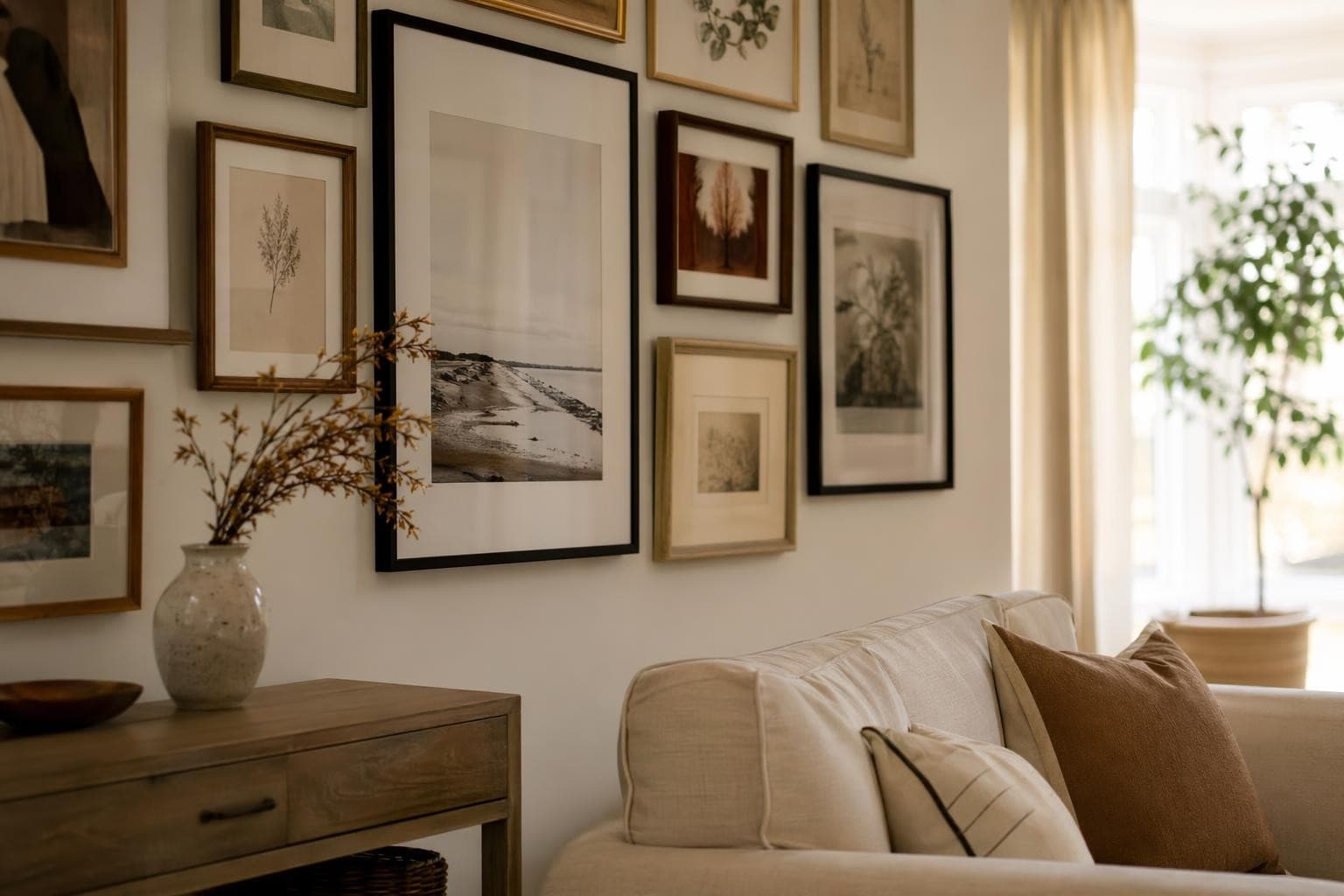
Living Room Wall Decor Ideas That Go Beyond the Gallery Wall

The gallery wall had a great run. But at this point, the grid of mismatched frames from the same big-box store has become the beige of wall decor — safe, predictable, and not particularly interesting anymore.
Your living room walls do a lot of work. They're the backdrop for everything — every photo, every gathering, every time you walk in the door. Here are 8 ideas that go further than a gallery wall and actually make your room feel like a place someone designed, not just decorated.
One Large Statement Piece: The 2/3 Rule
One oversized piece of art above your sofa will do more for the room than any arrangement of small frames. The sizing rule that designers use: your art should be two-thirds to three-quarters the width of the furniture below it. If your sofa is 84 inches wide, your art should be between 56 and 63 inches wide.
Most people hang art that's too small above their sofa — it floats disconnected from the furniture below. Bigger is almost always better. You can get large canvas prints from Society6, Desenio, or local print shops for $80–250 in sizes that actually fill a wall properly.
Hanging height: the center of your art should be at eye level, roughly 57–60 inches from the floor. Above a sofa, the bottom edge of the frame should be 6–8 inches above the sofa back. Anything higher and the art disconnects from the furniture below it.
Woven Wall Hangings and Textiles: Warmth and Texture
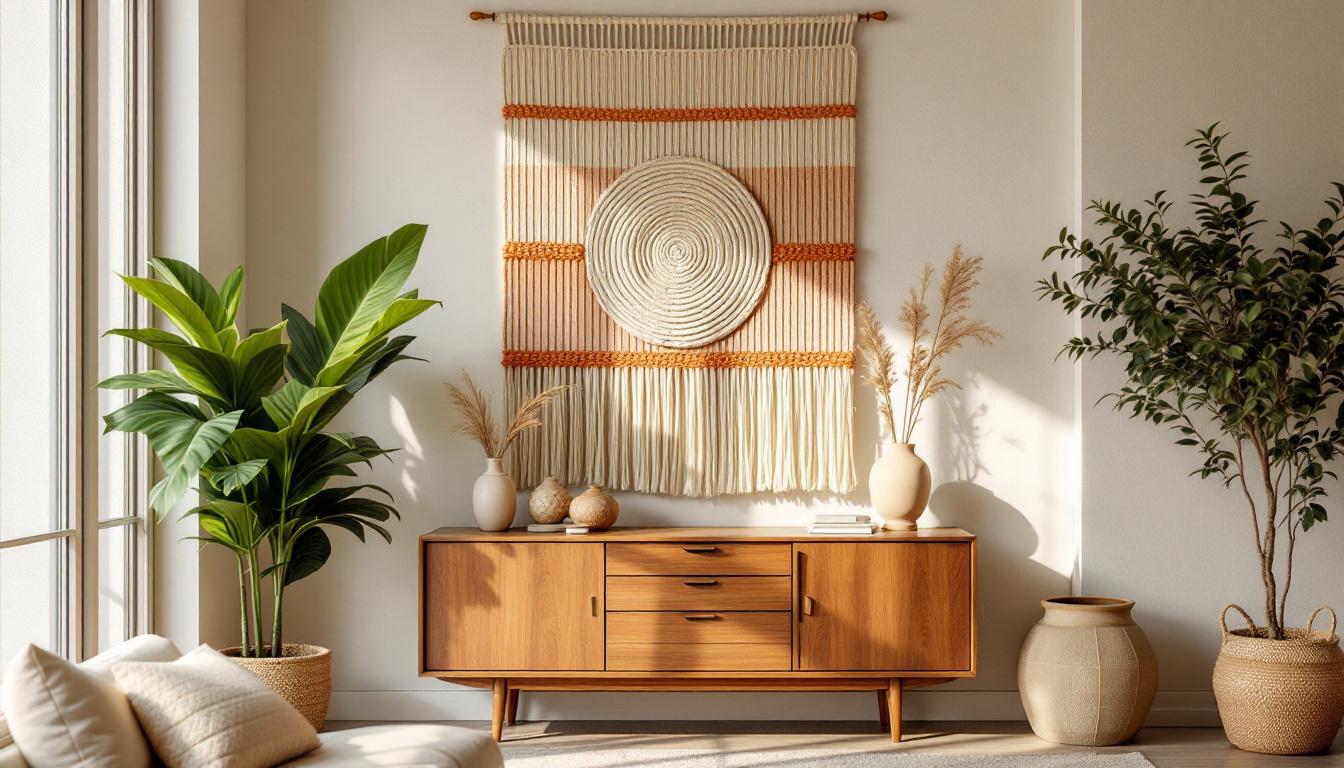
A large woven wall hanging does something no framed art can: it adds texture. That physical dimension — the depth of the fibers, the way it moves slightly, the way it absorbs sound — makes a room feel fundamentally warmer and more human.
Woven hangings range from $30 for a small Etsy find to $200+ for a large handmade piece from an independent textile artist. The sweet spot for a living room statement piece is $60–150 for something that's about 24–36 inches wide. That's enough to make an impact without overwhelming the wall.
You can also use a textile — a vintage kilim rug, a woven tapestry, a large block-print fabric panel — hung on a dowel rod. A beautiful vintage Turkish kilim hung on a wall costs $80–200 at estate sales or eBay and looks like a $1,000 design decision.

Mirror as Focal Point: Light and Space
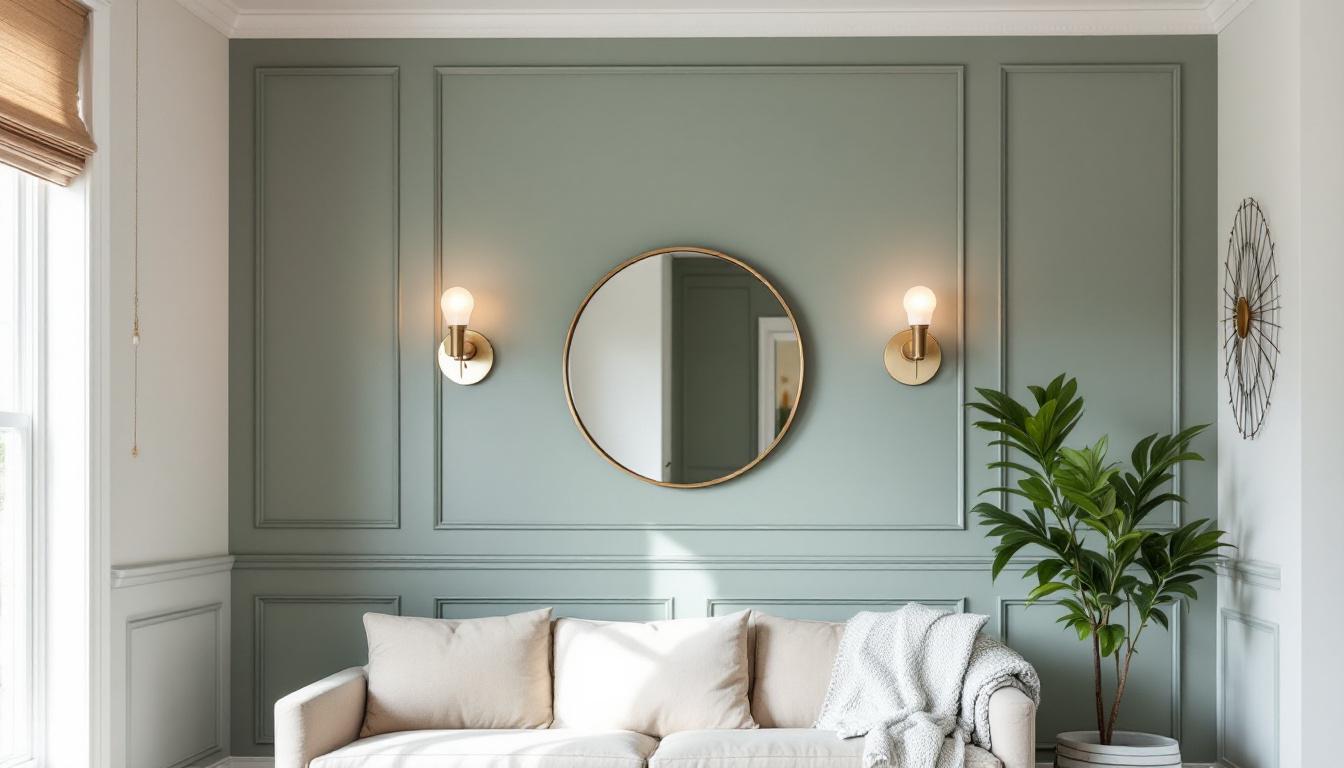
A large mirror is one of the most functional pieces of wall decor you can buy. It reflects light and makes the room feel measurably larger — particularly effective in rooms with limited natural light or a single window.
The positioning trick: hang or lean your mirror opposite a window. It will reflect the natural light and effectively double the perceived brightness of the room. Position it to also capture a nice reflection — a plant, a lamp, a piece of furniture — rather than a blank wall or an unattractive view.
Large arched mirrors are particularly popular right now for good reason — the arch shape softens a room full of right angles and feels architectural. Budget: $80–400 depending on size and frame finish. Brass, matte black, and natural wood frames are the most versatile.
Floating Shelves Display: Functional and Decorative
A set of floating shelves does double duty: it gives you display space AND storage while adding architectural interest to a blank wall. The key is treating the shelf styling like a curated display, not extra storage for things that don't have a home.
Floating shelf sets run $50–200 depending on size and material. Solid wood or wood-look shelves in natural or black look best — avoid glass shelves in living rooms (they require constant cleaning and look dated). Stagger the heights for visual interest rather than lining them up at the same horizontal level.
Rotate your shelf decor seasonally — swap out 2–3 objects per shelf with the season and the whole display feels fresh without buying new furniture. Keep books as permanent anchors and rotate small objects, plants, and candles around them.

Architectural Panels: Board and Batten, Fluted, Limewash
If you want wall decor that looks like a renovation rather than decorating, architectural treatments are the answer. Board and batten wainscoting on the lower half of a wall costs roughly $5–10 per square foot as a DIY project — that's $150–300 for a 10-foot section of wall, material cost only.
Fluted MDF panels are trending hard right now because they look high-end and are actually affordable — about $8–15 per panel at most home improvement stores. Install them vertically on a single accent wall, paint everything (wall and panels) the same color, and the result looks like a custom millwork feature that a designer charged $2,000 to specify.
Limewash paint on a single wall (roughly $80–150 in supplies) gives you a textured, aged appearance that photographs beautifully. It's a one-day DIY project that makes a plaster wall look like it's been in a Tuscan villa for 200 years. The texture varies with each application — no two walls look exactly alike.
Wall Sconces Instead of Art: Functional Focal Points
Plug-in wall sconces are one of the most underused tools in living room design. They do everything: they add warm light at the right height, they fill a blank wall with something three-dimensional, and they work as decorative objects even when they're switched off.
Plug-in sconces (so you don't need an electrician) run $50–200 per sconce. A pair of plug-in sconces flanking a sofa or a large mirror is a classic designer move — it looks intentional and expensive, but the installation is just driving two screws and hiding a cord with a cord cover or running it behind the wall.
Swing-arm sconces are particularly useful for reading zones — they adjust position, direct light where you need it, and look architectural. In brass, matte black, or brushed nickel, a pair of swing-arm sconces instantly elevates a room from 'nicely furnished' to 'professionally designed.'
Plate Wall: Vintage or Modern, Thrift Store Budget
A plate wall sounds old-fashioned but done correctly it looks completely fresh. The key is curation — you want plates with a coherent visual story, not a random assortment of stuff you found in boxes.
At thrift stores and estate sales, you can build a beautiful collection of vintage blue-and-white porcelain, hand-painted folk art plates, or simple cream ironstone for $5–15 each. A collection of 9–12 plates in a cohesive color palette, hung in an organic arrangement, costs $60–150 total and looks intentional and layered.
Plate hangers from Amazon cost $2–5 per plate. Plan your arrangement on the floor first — lay out the plates and take a photo of the arrangement before you start putting holes in the wall. Start from the center and work outward. Plates at varying heights and odd groupings look more dynamic than a grid.
Wallpaper Accent Wall: One Wall, Big Impact
One wallpapered wall in a living room is one of the highest-impact, relatively affordable design moves available to you. Peel-and-stick wallpaper means no paste, no professional installer, and no permanent commitment — you can change it when you want to.
A 100-square-foot accent wall (roughly 10x10 feet) in peel-and-stick wallpaper costs $150–400 depending on the pattern and brand. Spoonflower, Chasing Paper, and Tempaper all offer high-quality removable options in patterns that look nothing like the peel-and-stick of 15 years ago.
Best patterns for a living room accent wall: large-scale botanicals, abstract painterly designs, grasscloth texture wallpaper (looks like actual grasscloth at a fraction of the cost), subtle geometric. Avoid small-scale patterns — they read as busy from across the room and compete with your furniture.
Frequently Asked Questions
How big should wall art be in a living room? Your primary piece of art should be 2/3 to 3/4 the width of the furniture below it. For a standard 84-inch sofa, that means art that's roughly 56–63 inches wide. Most people hang art that's too small — bigger fills the space and anchors the furniture.
How high should I hang art on the wall? The center of your art should sit at eye level — about 57–60 inches from the floor. Above a sofa, the bottom of the frame should be 6–8 inches above the sofa back. Going too high disconnects the art from the furniture and makes the ceiling feel lower.
What can I put on my living room wall besides art? Mirrors, woven wall hangings, floating shelves with styled displays, architectural treatments (board and batten, fluted panels), wall sconces, plate walls, and wallpaper accent walls. All of these are covered in detail above.
How do I make a wall look expensive on a budget? A large mirror (reflect light, make the room feel bigger), limewash paint on a single wall ($80–150 DIY), or one oversized piece of art from a print shop ($80–200) will each dramatically elevate the room for under $200.
Is the gallery wall trend over? Gallery walls still work when done with intention and curation — a collection of original artwork or meaningful photos in matching frames on a well-chosen wall. What's tired is the random assortment of quote prints and stock photo art in mismatched frames. The execution matters more than the format.