Living Room Decor Ideas That Make a Room Feel Complete (2026)

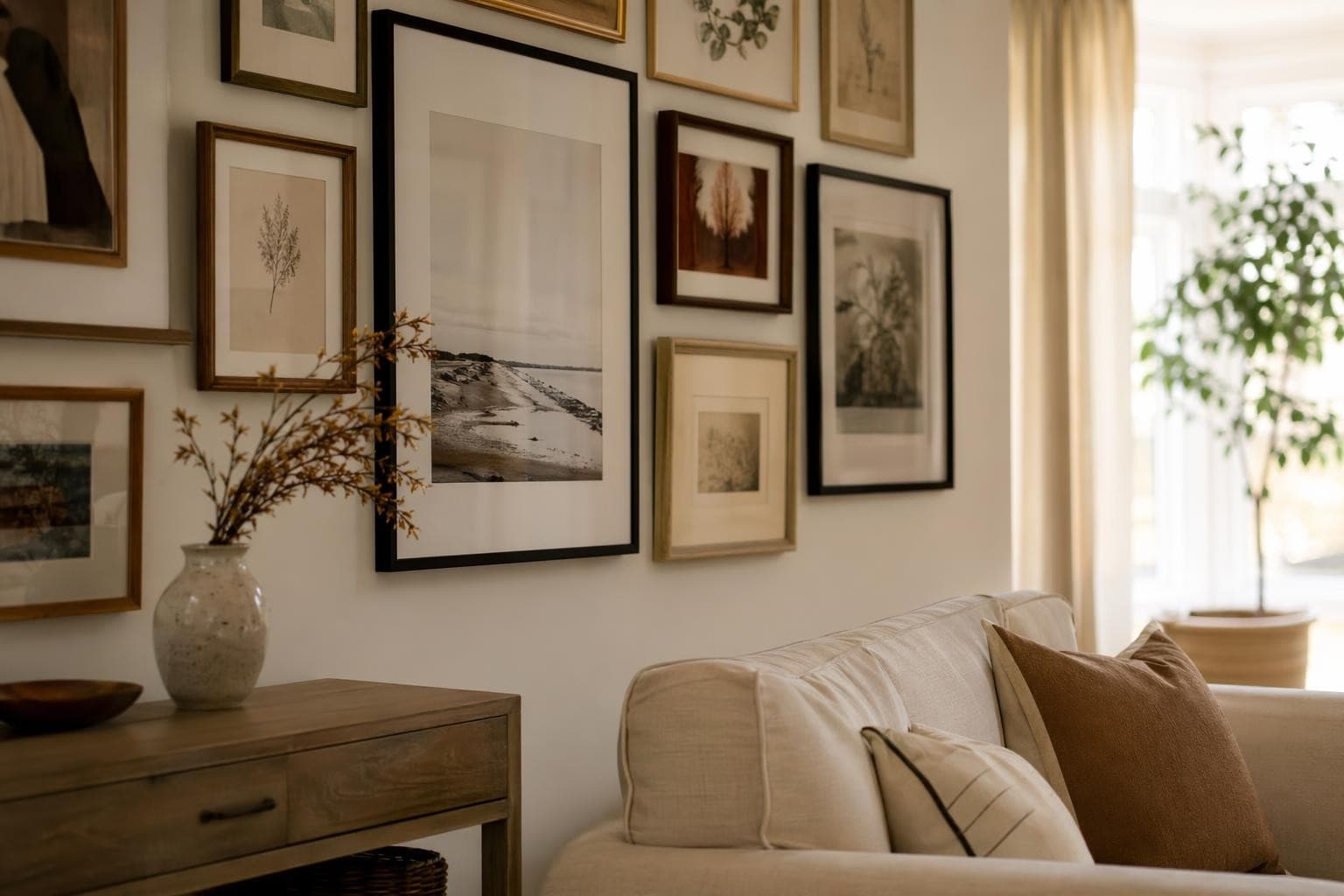
Most living rooms don't have a design problem — they have a completeness problem. The furniture is fine, the paint is okay, there's a rug and some pillows. But it doesn't quite feel finished. It feels like a room that happened rather than a room that was designed. The difference between those two things is usually a handful of specific decisions applied consistently. These living room decor ideas for 2026 give you the framework to make those decisions — not vague inspiration, but actual rules with measurements and costs.
The 60-30-10 Color Rule, Applied
The 60-30-10 rule is the most reliable starting point for any room's color palette. Sixty percent of the room is your dominant color — the walls, the largest sofa, the main rug. Thirty percent is your secondary color — accent chairs, curtains, the ottoman. Ten percent is your accent — throw pillows, artwork, a single lamp shade, a vase. In practice: if your walls are warm white and your sofa is a warm medium gray, your 60 and 30 are already established. Now your 10% accent color is what makes the room feel intentional. That might be a terracotta throw, two deep teal pillows, or a cluster of brass accessories. It doesn't have to be expensive — a $40 throw and $25 in throw pillows can complete the palette. The most common mistake is using too many accent colors. If you have red pillows, blue throw, green plant pot, and yellow lampshade all at the same visual weight, nothing pops and everything fights. Pick one accent color and let everything else support it. Your plants and natural wood tones are neutral — they don't use up your accent budget. In 2026, the dominant color direction is warm. Warm whites, warm beiges, warm taupes as the dominant 60. Warm terracotta, clay, rust, or sage green as the 30. Deeper versions of those tones as the 10% accent.
Coffee Table Styling: The Tray Method
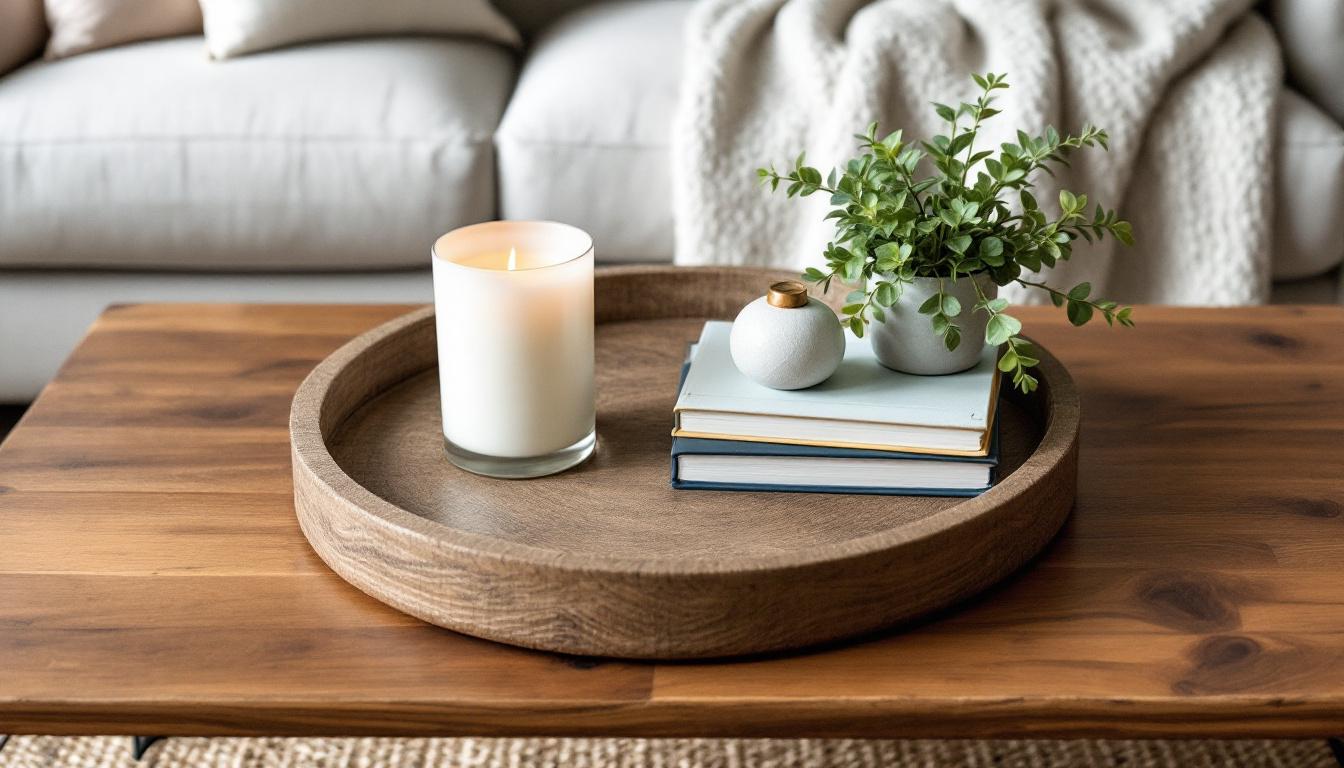
A coffee table with nothing on it looks unfinished. A coffee table with too much on it looks chaotic. The tray method solves this by giving you a defined zone that contains your styling. The formula: a tray as the container, two or three books stacked flat as a base layer, one candle or small sculptural object on top of the books, and one organic element (a small plant, a few stems in a bud vase, a bowl of stones). Vary the heights — the books lay flat and low, the object on top goes medium, the plant or vase goes tall. That height variation is what creates visual interest. For the tray itself: a round tray on a round or oval coffee table, a rectangular tray on a rectangular table. Materials that work well: white lacquer, natural wood, marble, hammered brass. Keep it to one tray per coffee table. Two trays looks like you moved in and haven't unpacked. Leave at least half the coffee table surface clear. The open space is as important as the styled section — it's where your drinks go, where kids do homework, where remote controls live. A fully covered coffee table that can't be used is a coffee table that doesn't work.
Throw Pillow Formula: Odd Numbers and Mixed Sizes
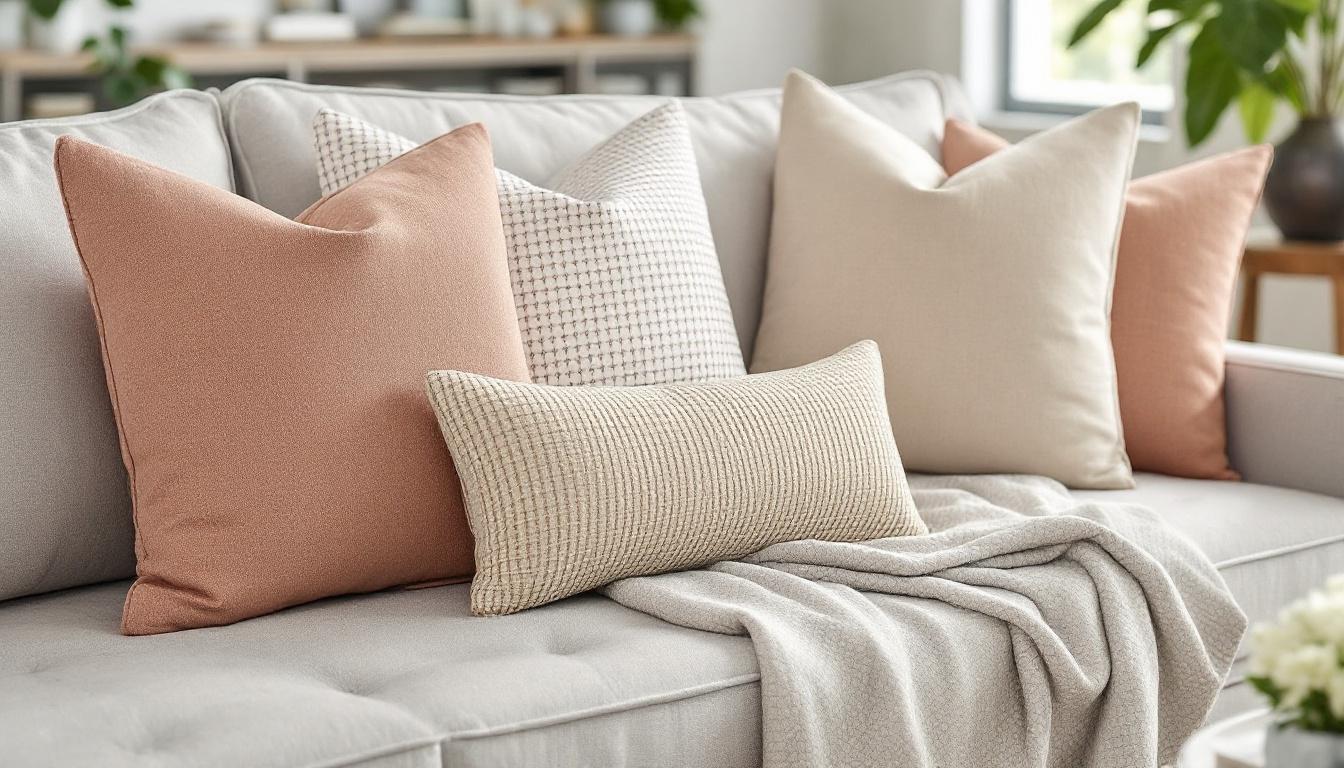
Throw pillows are one of the easiest ways to refresh a living room for under $100, and they're one of the most commonly overcomplicated decisions in home decor. The rules are straightforward once you know them. Odd numbers work better than even numbers on a sofa. Three pillows on a two-cushion sofa, five on a three-cushion sofa. An even number of perfectly matched pillows reads as a hotel lobby. An odd number of complementary pillows reads as designed. Mix sizes. A 22-inch pillow as the back layer, an 18-inch pillow in front of it, and a 12-inch lumbar at the center front. The layering of sizes creates depth. All the same size looks flat. Mix textures within your color palette. A linen pillow, a velvet pillow, and a woven or embroidered pillow in coordinating tones reads far more interesting than three pillows in the exact same fabric at the same color. Your pillow covers should all speak the same color language even if they're different materials. Budget: $20–$60 per pillow cover (inserts are separate — buy good inserts, down or down-alternative, slightly larger than the cover for a full look). For a three-pillow setup, you're looking at $60–$180. Refresh seasonally by swapping covers only.
Curtains That Elevate a Room (One Measurement Changes Everything)
Here's the one curtain decision that has more impact than any other: mount the rod at the ceiling (or 4–6 inches above the window frame), not at the window frame itself. Floor-to-ceiling curtains make the room feel significantly taller and the windows feel significantly larger — even if the actual window is small. Window-frame-mounted curtains are the most common mistake in living rooms. They cap the visual height of the room at the window top. Ceiling-mounted curtains let the eye travel all the way up, making 8-foot ceilings feel like 10. Also: extend the rod 6–12 inches past each side of the window frame. When the curtains are open, they stack on the wall rather than covering the glass — letting in maximum light and making the window appear wider. For fabric: linen or linen-look fabric in a neutral tone (ivory, warm white, light oat, soft gray) works in almost any living room. Floor-length curtains that just barely touch the floor — or have one inch of break — look cleaner than curtains pooling dramatically on the floor (which requires constant adjustment and collects dust). Budget: $50–$150 per panel. For a standard window you'll use 2 panels. For a large window or a sliding door, 3–4 panels. IKEA LENDA and DYTAG panels are genuinely good options in the $30–$60/panel range.
Rug Sizing: The Rule About Furniture Legs
The most common rug mistake in living rooms is going too small. A rug that only fits under the coffee table while the sofa and chairs float on bare floor makes the room feel like the furniture is drifting. It looks accidental. The minimum standard: at least the front two legs of every major seating piece should be on the rug. Ideally, all four legs of every piece are on the rug — this fully grounds the seating area and makes it read as one unified zone rather than separate islands of furniture. For most living rooms with a sofa plus two chairs or a sectional, an 8x10 rug is the practical minimum. A 9x12 is better if the room can fit it. In larger open-plan spaces, go bigger — a 10x14 or even two rugs in adjacent zones. If your current rug is too small, don't layer it on top of a larger one yet (that gets complicated). Just replace it. A 8x10 rug in natural fiber (jute, sisal) or a flatweave pattern runs $150–$400 from Ruggable, IKEA, or Amazon basics. A 8x10 in wool or a quality pile rug runs $400–$1,200.
Bookshelf Styling: The 30-30-40 Rule
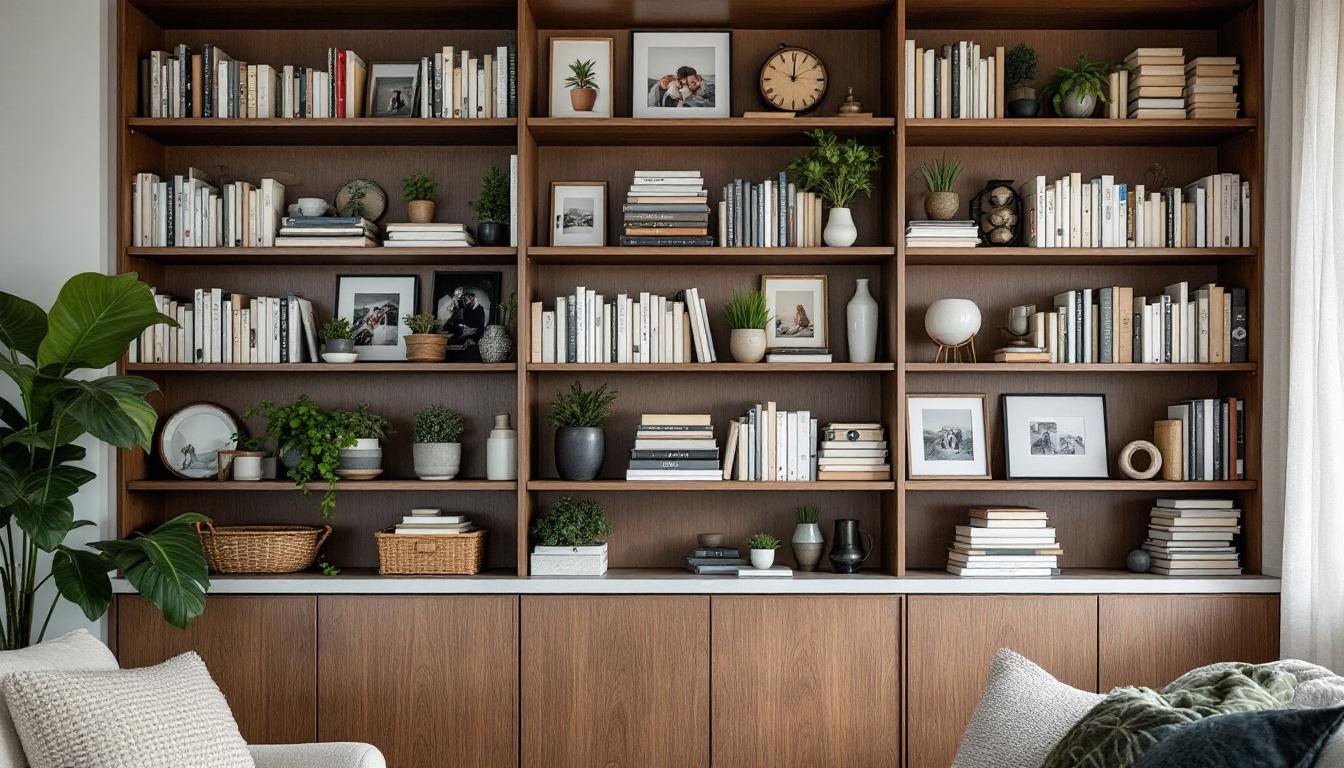
A bookshelf crammed full of books looks like a library. A bookshelf with only a few decorative objects looks like a showroom. The middle ground is 30% books, 30% decor objects, and 40% open space. Books: organize them by color if you want a visually clean look, or by category/author if you actually use them. Mix horizontal stacks with vertical rows. A stack of three to four books laid horizontally creates a platform for a small object placed on top — this is one of the most useful bookshelf styling tricks. Decor objects: a mix of heights, materials, and textures. A small ceramic vase, a sculptural object, a framed photo, a small plant. Odd numbers again — group things in threes rather than twos or fours. Open space: leave some shelves intentionally sparse or even empty. This is the hardest part because it feels like wasted space, but the empty shelf gives your eye a place to rest. A fully packed bookshelf — even if every item is beautiful — reads as chaotic because there's no visual pause.
Layered Lighting: Why One Overhead Light Is Never Enough
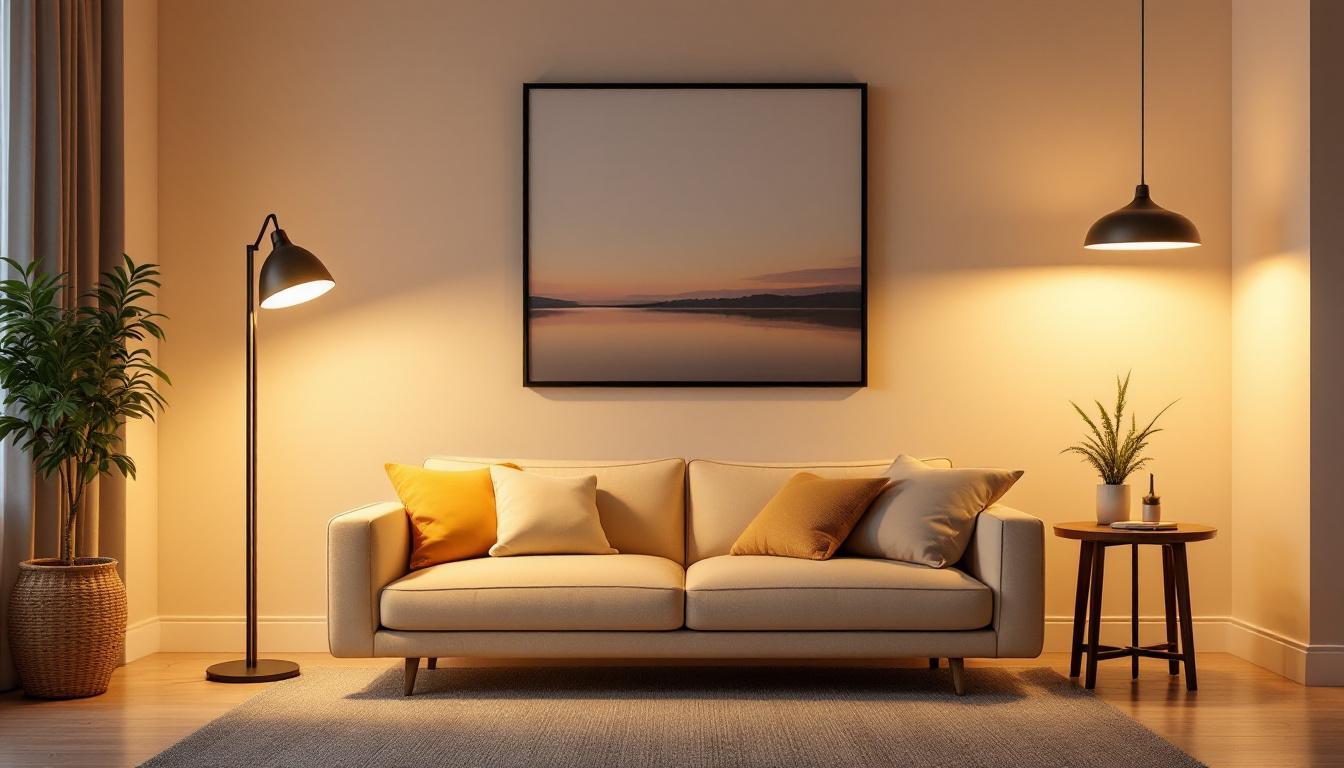
A living room lit only by a single overhead fixture — a ceiling fan light, a recessed can, a flush-mount — looks flat and institutional, regardless of how good the furniture is. Layered lighting is what makes a room feel warm and livable at night. The goal is at least three light sources at different heights. An overhead source (ceiling fixture or recessed cans) for ambient light when you need full brightness. A floor lamp in a corner or beside a chair for mid-level, soft ambiance. A table lamp on an end table or console for low, intimate light. If you have a fireplace, a candle cluster on the mantel counts as a fourth. The height variation is key. All lights at the same height (all overhead or all table level) reads as monotonous. Varying the heights creates depth and warmth, the same way a restaurant lights itself differently from an office. For bulbs: 2700K color temperature is the warm standard for living rooms. 3000K is acceptable. Anything higher (4000K, 5000K) is cool and blue — it makes a living room feel like a bathroom or an office. If your living room feels cold at night even though the furniture is warm-toned, check your bulb temperature. Budget: a good floor lamp runs $80–$250. Table lamps $40–$150 each. These are one-time purchases that last years — worth investing in quality.
2026 Living Room Trends Worth Paying Attention To
A few directions that are showing up consistently in living rooms in 2026, not as fleeting micro-trends but as a broader shift in how people want their homes to feel: Warm earth tones are replacing the gray-and-white minimalism that dominated the 2010s. Terracotta, clay, warm caramel, rust, and ochre are showing up in upholstery, walls, and accessories. They photograph well, age well, and feel genuinely comfortable to be in. Real plants — not fake, real — are a defining feature of spaces that feel alive. A large fiddle leaf fig, a monstera, a bird of paradise, or a cluster of smaller plants in the corner makes a living room feel inhabited in the best way. They soften hard edges, add color, and filter air. The care commitment is real, but the design return is significant. Textured walls are coming back: limewash paint, textured plaster, grasscloth wallpaper, and board-and-batten paneling all add dimension that flat painted walls don't have. These aren't expensive renovations — limewash paint is a DIY-friendly technique that costs $100–$300 for a living room wall. Curved furniture — rounded sofas, curved chairs, kidney-shaped coffee tables — is a counterpoint to decades of strict right angles. A curved sofa is the statement piece of 2026. It softens the room, photographs beautifully, and is genuinely more comfortable for groups (everyone faces slightly inward). Budget: $800–$3,000+ for a quality curved sofa from Article, IKEA, or West Elm.
Frequently Asked Questions
What rug size should I use for my living room?
For most living rooms with a standard sofa-and-chairs arrangement, an 8x10 is the practical minimum. A 9x12 is better. The rule is that at least the front two legs of every seating piece should be on the rug — ideally all four legs. If your current rug doesn't achieve this, it's too small.
How do I apply the 60-30-10 color rule?
60% is your dominant color — walls and largest furniture. 30% is your secondary color — accent chairs, curtains, rug. 10% is your accent — pillows, artwork, small accessories. The key is to pick one accent color and use it consistently rather than mixing five different accent tones at equal weight.
How high should I hang curtains in a living room?
Mount the rod as close to the ceiling as possible, or 4–6 inches above the window frame at minimum. Floor-length curtains that hang from near the ceiling make the room feel taller and the windows feel larger — this single change has more visual impact than most other curtain decisions combined.
How many throw pillows should a sofa have?
Three pillows on a two-cushion sofa, five on a three-cushion sofa. Odd numbers read as designed; even numbers read as symmetrical and safe. Mix sizes (22", 18", 12" lumbar) and mix textures within your color palette for the most layered result.
What are the biggest living room trends in 2026?
Warm earth tones replacing cool gray, real plants as decor (not fake), textured walls (limewash, plaster, grasscloth), and curved furniture — particularly curved sofas. The broader shift is away from stark minimalism toward spaces that feel warm, lived-in, and human.
The living room is the room your guests see first and the room you spend the most time in — it's worth getting right. The changes that make the biggest difference (rug sizing, curtain height, lighting layers, a consistent color palette) don't require a renovation budget. They require knowing the rules and applying them deliberately. If you want to see what any of these changes would look like in your actual living room before moving furniture or buying anything, upload a photo to StableRender and get a photorealistic AI preview in under a minute.