Kitchen Decor Ideas That Make Your Space Feel Finished

Your kitchen might be perfectly functional and still feel like something is missing. The appliances work, the cabinets close, the counters are clean — but it just doesn't feel finished. That gap between functional and feels-like-home is almost always a decor problem, not a renovation problem. The good news: most of these kitchen decor ideas cost under $100 and take an afternoon.
Let's walk through the specific areas — shelves, counters, island, lighting, windows, walls, and plants — with practical decisions you can make today.
Open Shelving: The Rule of Three and Why Height Mixing Matters
Open shelving looks great in magazines and chaotic in real life if you don't have a system. The rule of three is the simplest system that actually works: group items in odd numbers and vary the heights within each grouping. Three mugs stacked with one lying on its side next to a small plant. A tall olive oil bottle next to a medium jar of pasta next to a small bowl of salt. The variation in height is what makes it look intentional rather than just stuff sitting on a shelf.
Color discipline is equally important. Stick to two or three colors max across your entire shelf display. White ceramics, natural wood tones, and one accent color (terracotta, sage, navy) is a palette that works in almost any kitchen. When you introduce too many colors, the shelf reads as clutter even if everything is technically tidy.
Floating shelves in white oak or pine run $40-120 per shelf at most home improvement stores. If you're renting, Command strips rated for 15-20 lbs can hold a lightweight decorative shelf with no wall damage. Don't overload open shelves with everyday dishes you need to grab constantly — those belong in closed cabinets where you can grab them without disrupting the arrangement.

Countertop Decor: What to Keep Out and What to Hide
The most common countertop mistake is keeping everything out because it's convenient. The toaster, the blender, the paper towel roll, the knife block, the fruit bowl, the mail pile, the coffee maker, the air fryer — suddenly you have two square feet of usable counter and zero visual breathing room.
A useful rule: if you don't use it daily, it goes in a cabinet. The coffee maker stays. The blender you use twice a week goes under the counter. The air fryer you use every night stays; the toaster oven you use occasionally goes away. Once you've done that edit, you'll have space to make what remains look intentional.
What looks good on counters: a wooden cutting board leaned against the backsplash, a ceramic crock with your most-used utensils, a small potted herb, a pretty dish for keys or a lemon. That's it. Restraint is the point. If your counters look a little sparse, that's usually the right direction.

Kitchen Island Decor: Trays, Fruit Bowls, and Pendant Lights
If you have a kitchen island, it's the focal point of the whole room whether you want it to be or not. People's eyes go there first. That means island decor is worth spending a little more thought on.
The most functional decor approach is a large tray — marble, wood, or woven — that corrals a small grouping: a fruit bowl (real fruit, not fake), a candle, maybe a small plant or bud vase. The tray does two jobs: it keeps the items from spreading across the whole island, and it makes the arrangement look intentional rather than random.
Pendant lights above the island are the single upgrade that transforms the space the most. Two or three pendants hung 30-36 inches above the island surface (measure from countertop to bottom of pendant) create intimacy and definition. Budget pendants start around $40-60 each at places like Amazon or Wayfair. For a 4-foot island, two pendants spaced 24 inches apart is the standard formula. For a 6-foot island, three pendants with 18-24 inches between them.
If you can't add pendants (renting, no overhead box), a statement floor lamp positioned at the end of the island creates a similar anchoring effect for around $60-100.

Under-Cabinet Lighting: The $30-80 Upgrade That Changes Everything
Most kitchens are lit from overhead, which creates shadows on the counters where you're actually working and doing prep. Under-cabinet lighting fixes this completely and costs very little. Plug-in LED strip lights that stick to the underside of your cabinets run $25-50 for a full kitchen. Hardwired puck lights cost more to install but look cleaner.
For color temperature: 2700K-3000K (warm white) looks best in most kitchens and feels cozy. 4000K (cool white) is better if you do a lot of food prep and want accurate color rendering. Avoid anything above 5000K — it turns your kitchen into a convenience store.
The trick with plug-in strips: route the cord along the inside edge of the cabinet where it disappears from normal viewing angles. A $3 cable clip from Amazon keeps the cord flat against the wood. Most people can install under-cabinet lighting in under an hour with no tools beyond a step stool.

Window Treatments: Roman Shades vs Cafe Curtains
Kitchen windows often get ignored because people don't want heavy curtains blocking light, but bare windows look unfinished and cold, especially in evenings. The two best options for kitchens are Roman shades and cafe curtains, and they serve different needs.
Roman shades stack flat when raised, so you get full light when you want it and privacy when you need it. They come in woven natural fibers (jute, linen, bamboo) that add texture without visual weight. Budget: $30-80 per window from IKEA or Amazon. They mount inside the window frame for a clean look.
Cafe curtains cover only the bottom half of the window, which is a classic approach for kitchens and works especially well if your window faces a neighbor or a street. You keep top-light coming in while blocking the sightlines from outside. Linen or cotton in white or a subtle pattern runs $20-50. They mount on a tension rod so no drilling required — perfect for renters.
Wall Art in Kitchens: What Actually Survives Grease and Steam
Kitchens are tough environments for wall art. Heat, steam, grease particles, and humidity damage paper prints and warp frames over time. That doesn't mean you can't have art — it means you need to think about materials.
What works well: metal prints (aluminum substrate, no frame needed, wipe clean), canvas prints with a UV-resistant coating, framed prints behind glass with sealed frames. What to avoid near the stove: unframed paper posters, cork boards, fabric wall hangings, anything with paper backing exposed to steam.
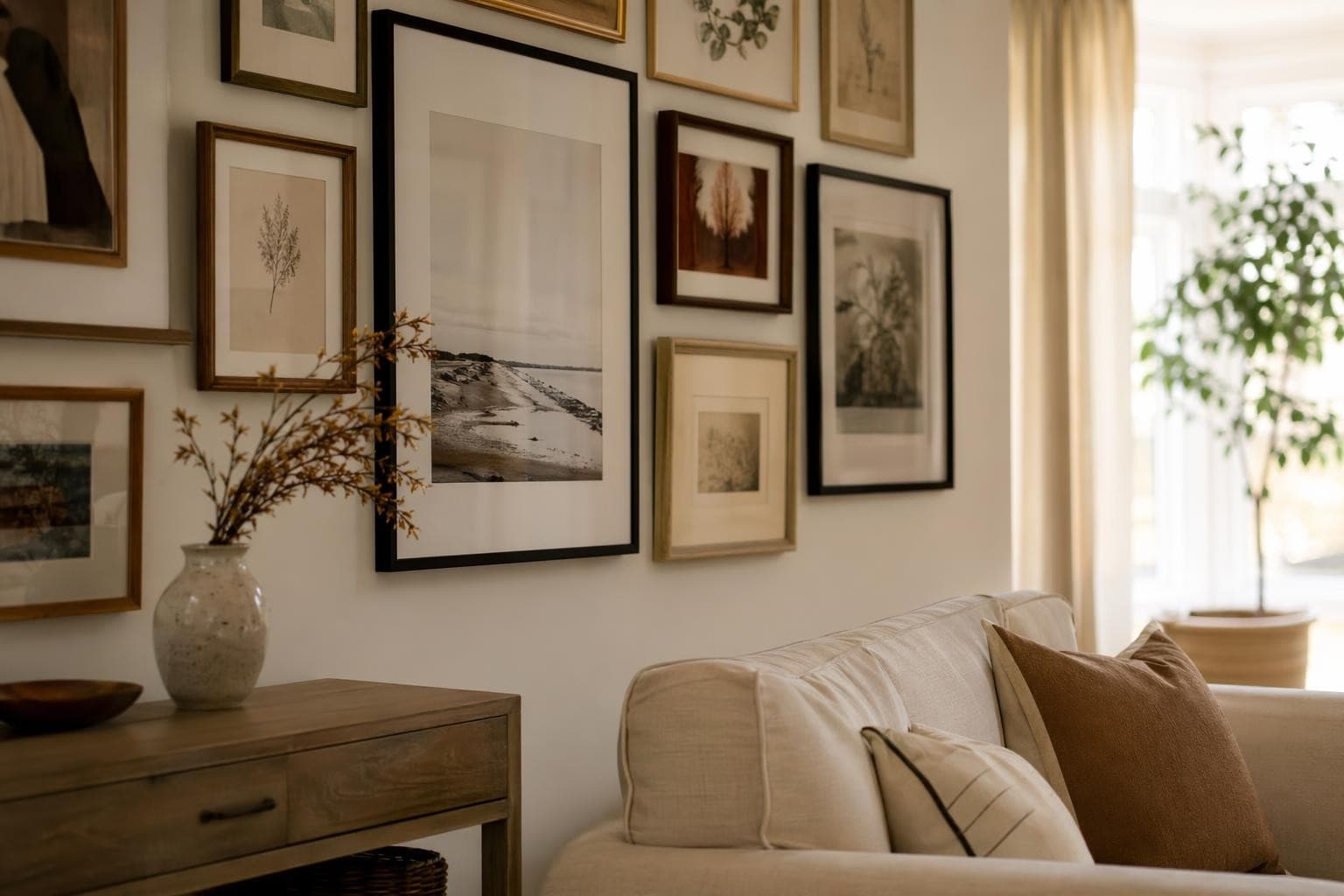
For subject matter, food and botanical prints are the obvious choice and remain popular for good reason — they're thematic without being forced. But kitchen art doesn't have to be food-themed. Abstract prints, architectural photography, and landscape art all work if they match your overall color palette. Groupings of 2-3 smaller frames (8x10 or 11x14) tend to look more collected and personal than one large statement piece.
Plants in the Kitchen: Pothos, Herbs, and What Actually Thrives
Plants make every kitchen feel more alive, and the kitchen is actually one of the better rooms in your home for certain plants because of the humidity from cooking and generally warmer temperatures. The challenge is light — many kitchens have limited natural light beyond one or two windows.
Pothos is the most forgiving kitchen plant you can get. It tolerates low light, irregular watering, humidity spikes, and the occasional neglect. Trail it from a high shelf or let it sit in a simple pot on the counter. Heartleaf philodendron is similarly tough.
Herbs on the windowsill work beautifully but require a window with at least 6 hours of direct sun. Basil, chives, and mint are the easiest. Rosemary and thyme need more sun and less humidity than most kitchens provide. If your window light is limited, a small grow light ($15-25) positioned above a windowsill planter extends your options considerably.
Succulents look great on a sunny windowsill but die fast in low-light kitchens. If your kitchen doesn't get direct afternoon sun, skip succulents and go with a pothos, ZZ plant, or even a simple snake plant in a corner. A dead or struggling plant on a counter looks worse than no plant at all.
Frequently Asked Questions
What are the best kitchen decor ideas on a tight budget? Under-cabinet LED lighting ($25-50), a wooden cutting board leaned on the backsplash ($20-40), a ceramic utensil crock ($15-30), and a pothos plant ($8-15) together cost under $120 and transform the feel of a kitchen more than most things twice the price.
How do I make a small kitchen look less cluttered? Edit first — anything you don't use daily comes off the counter. Then use vertical space with one or two open shelves. Keep your color palette tight (two or three colors). A rug under the sink area adds warmth without taking up counter space.
What kitchen decor is trending in 2026? Warm earth tones (terracotta, warm beige, sage green) replacing the cool gray-and-white palette. Curved shapes in accessories and decor. Natural materials — linen, wood, ceramic — over synthetic or chrome finishes. Vintage-inspired hardware with modern cabinets.
Do I need to match all my kitchen decor to one style? No, and trying to do so often makes spaces feel overly curated and a bit sterile. A better goal is a consistent color palette with varied textures and materials. You can mix modern cabinets with antique-look hardware, or industrial pendants with natural wood shelving, as long as the colors pull from the same family.
How do I use AI to plan kitchen decor before buying anything? Tools like StableRender let you upload a photo of your current kitchen and generate a photorealistic render showing how different decor choices, color palettes, or even layout changes would look. It's a lot cheaper to test an open shelving concept virtually before buying shelves you might hate in your actual space.