Dining Room Ideas That Make People Want to Stay for Dessert

The dining room used to be the most formal room in the house. In 2026, it's become the most interesting. Designers are pushing warm colors, sculptural furniture, and indoor-outdoor connections. Whether you're working with a dedicated dining room or carving out space in an open plan, these ideas will help you create a room people actually want to sit in — and linger in long after the plates are cleared.
Dining Table Ideas by Room Shape
The table is the anchor of your dining room — get this wrong and nothing else works. Before you shop, measure your room and mark out the table footprint with painter's tape. The rule of thumb: allow at least 36 inches of clearance on all sides so chairs can pull out comfortably without hitting a wall.
Rectangular tables suit long, narrow rooms and seat the most people for the footprint — standard dining table height is 28 to 30 inches, and you need at least 24 inches of width per person. Round tables are better for square rooms because they improve conversation and can seat four to six people in less floor space than an equivalent rectangle. An oval table is the compromise: it softens a boxy room, seats more people than a round, and avoids the sharp corners that make small rooms feel cramped.
If you host both intimate dinners and large gatherings, an extendable table is worth every penny. Quality extension tables run $500 to $2,000 — the mechanism should feel smooth with no wobble in either configuration. Self-storing leaves (they live inside the table) are more convenient than separate leaves you have to store in a closet. Try rendering your dining room with different table shapes before you buy — seeing a round versus rectangular table in your actual room is genuinely useful.

Chair Ideas That Change Everything
The biggest shift in dining room design over the last two years: nobody matches their chairs anymore. The 2026 approach is deliberately mixed — upholstered host chairs at the ends of a rectangular table, a different style along the sides, tied together by a single consistent element like leg finish or color family. It looks intentional rather than accidentally eclectic.
Bench seating on one side of the table saves space and gives the room a relaxed, casual feel — a bench that seats three takes up about the same floor space as two individual chairs. Budget-wise, two statement chairs at $200 each plus four simple chairs at $80 each gives you more visual interest than an identical set of six at $150 each, and often costs less.
For materials: velvet upholstery adds warmth and looks expensive — treat it with fabric protector and it's surprisingly practical. Woven rattan brings texture and a natural quality that works in almost any style from coastal to mid-century to transitional, typically $150 to $400 per chair. Seat height matters: 18 inches is the standard for a 28-to-30-inch table, leaving about 10 to 12 inches between seat and tabletop, which is the comfortable range for most adults.

Wall and Color Ideas
The 2026 dining room color palette has moved decisively away from whites and grays. Designers are reaching for chocolate brown, terracotta, ochre, smoky jade, and deep burgundy. These colors do something interesting: they make the room feel more intimate without making it feel smaller. A dark-painted dining room with good lighting actually appears more spacious than the same room in a pale color, because the walls recede visually.
Mural wallcoverings are the biggest 2026 trend in dining spaces — a single statement wall with a botanical print, abstract pattern, or landscape creates atmosphere that paint alone can't match. Removable peel-and-stick wallpaper has gotten genuinely good; panels run $30 to $80 each and the application is manageable as a weekend DIY. For renters or commitment-phobes, it's the lowest-risk way to experiment with a bold wall.
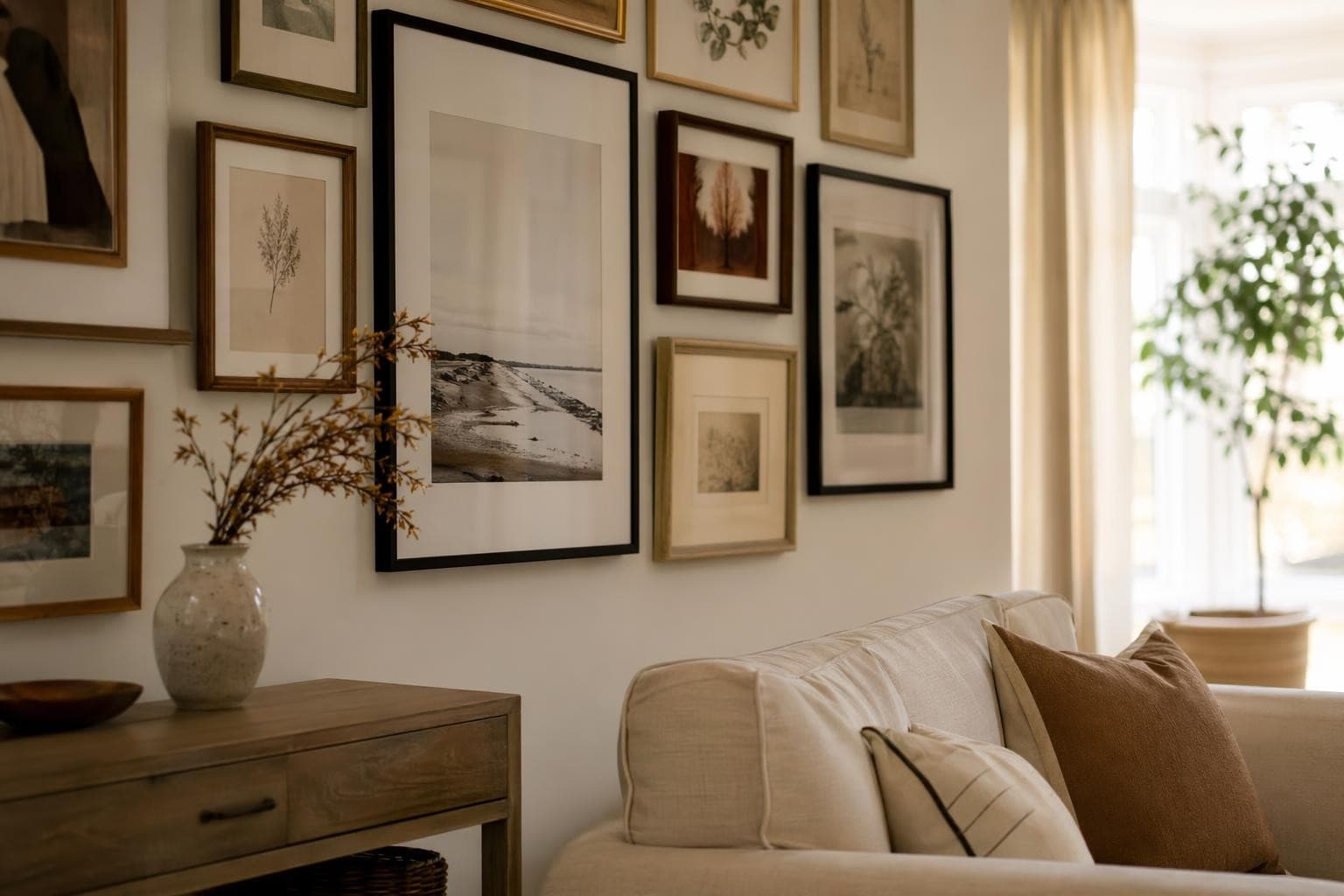
If you're painting, a single dining room runs $150 to $300 in paint and supplies for a DIY job. Architectural detail — wainscoting, board and batten, or picture rail molding — costs $5 to $10 per square foot as a DIY project and adds permanent character. A gallery wall of mismatched frames in a consistent finish (all black, all brass, all white) is the budget version: fill frames with art prints, vintage plates, or mirrors for a collected look.

Lighting Ideas That Set the Mood
Lighting is where dining rooms succeed or fail as atmosphere. The classic formula: chandelier diameter in inches equals room length plus width in feet. A 12 by 14 foot room wants a 26-inch chandelier. Hang it 30 to 34 inches above the table surface — higher than that and it loses its intimate effect, lower and people can't see across the table.
The single highest-impact-per-dollar upgrade in any dining room is a dimmer switch, which runs $15 to $30. Overhead dining room light at full brightness for a dinner party is uncomfortable — dimmers let you shift from practical to atmospheric in seconds. Install one the first weekend.
For fixture style: modern linear pendants over rectangular tables read as contemporary and bold. Sputnik chandeliers work in mid-century and eclectic rooms. Drum pendants in linen or rattan are the safe, versatile choice that suits almost every style. Wall sconces on either side of a buffet or mirror add ambient warmth and layered light — the goal is never to have a single harsh light source as the only option. Good dining room lighting has at least two layers: overhead and ambient.

Small Dining Room and Open Plan Ideas
Small dining rooms benefit most from the round table trick — a 48-inch round seats four comfortably in a space where a 36-by-60-inch rectangle would feel cramped. A banquette or built-in bench against the wall is the other reliable move: it takes zero floor space for chair pull-out, creates built-in storage underneath, and gives the room a cozy, European restaurant quality.
A large mirror on one wall doubles the perceived depth of the space — hang it opposite a window to bounce natural light. Folding or drop-leaf tables work for households that rarely host but want the option: they compress to 18 inches deep against a wall and open to seat four to six, typically $200 to $500.
In open-plan spaces, the dining area needs visual anchoring or it disappears into the living room. A rug defines the zone — size it so it extends 24 inches past the table on all sides, large enough that chair legs stay on the rug when pushed back. A pendant light centered directly over the table does the same work overhead, declaring this is the dining space even without walls.

Indoor-Outdoor Dining
One of the strongest 2026 dining room trends is the move toward the back of the house. Dining rooms positioned adjacent to the garden — with French doors or wide sliding glass panels that fold away — feel larger, bring in natural light, and make entertaining genuinely more relaxed. When indoor and outdoor dining are connected, you effectively double your hosting space in good weather.
For continuity, use the same flooring material (or a very close match) inside and outside the threshold — large-format porcelain tile works both indoors and on a covered patio. A covered outdoor dining area functions as a true room extension rather than a back-up option. Render your dining room with an indoor-outdoor connection to see what that transformation would actually look like in your space before you start any construction.
Frequently Asked Questions
What dining room colors are trending in 2026?
Warm earth tones are dominating — chocolate brown, terracotta, ochre, muted sage and jade greens, and deep burgundy. The move is away from gray and white into colors that create warmth and intimacy. Dark colors in dining rooms are especially popular because they make the space feel cozy rather than cold.
How big should my dining table be?
Allow 36 inches of clearance from the table edge to the wall on all sides so chairs can pull out without hitting anything. Plan for 24 inches of table width per person — a 48-inch wide table seats two per side comfortably. Measure your room and tape out the table footprint before you buy anything. An extendable table is worth considering if your household size varies.
Can I use AI to design my dining room?
Yes — StableRender lets you upload a photo of your dining room and see it redesigned in different styles in seconds. You can try warm earthy tones, modern minimalist, Japandi, or mid-century looks before committing to paint or furniture. Three free renders to start, no credit card required.
Are formal dining rooms outdated?
Formal is out, but dining rooms are more popular than ever as actual gathering spaces. The shift is from rooms that were set aside for special occasions and mostly unused to rooms that are designed for daily meals, work-from-home lunches, and relaxed entertaining. The dining room as a lived-in, comfortable space is having a genuine moment.
What is the best lighting for a dining room?
A chandelier or pendant hung 30 to 34 inches above the table surface, paired with a dimmer switch. The dimmer is the $15 upgrade that makes the biggest practical difference — full brightness for clearing up, low warmth for dinner. Size the fixture so its diameter in inches equals the room's length plus width in feet.